
Untitled design (49)

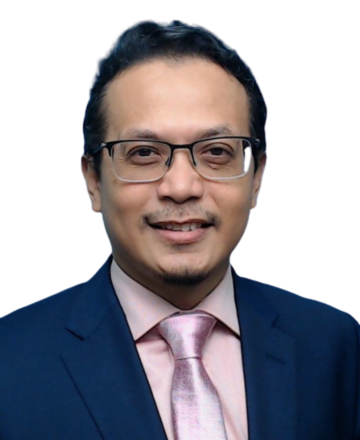
DR. AHMAD EL-MUHAMMADY BIN MUHAMMAD
UTHMAN EL-MUHAMMADY
Doctor of Philosophy (Muslim World Issues)

Dr. Ahmad El-Muhammady bin Muhammad Uthman El-Muhammady is a scholar-practitioner whose intellectual life unfolds at the intersection of thought and security, where ideas are not merely studied but engaged as forces shaping society. As an Assistant Professor at ISTAC-IIUM and Deputy Director at the Peace, Dialogue and Xenophobia Studies Centre (PEDIXS), his work navigates the complex terrains of extremism, governance, and civilisational renewal.

His scholarship is deeply anchored in the study of radicalisation, deradicalisation, and peacebuilding, yet it is distinguished by a rare synthesis of theory and lived experience. For over a decade, he has worked closely with national security institutions—including the Royal Malaysia Police and the Ministry of Home Affairs—contributing to rehabilitation programmes, policy frameworks, and expert testimony in matters of national significance .

Beyond Malaysia, his engagement extends to global platforms, serving as an associate fellow and advisor across international research and policy institutions. His research, teaching, and supervision reflect a commitment to restoring balance (wasatiyyah) in both thought and practice, addressing the roots of extremism while cultivating pathways toward resilience and social harmony.

In his work, knowledge is neither abstract nor distant—it is a responsibility, carried into the public sphere, where understanding becomes intervention, and scholarship becomes a quiet instrument of peace.

  • Doctor of Philosophy (Muslim World Issues) – Doctor of Philosophy, International Islamic University Malaysia
  • Master of Human Sciences (Political Science) – Masters Degree, International Islamic University Malaysia
  • Bachelor of Human Sciences (Political Science) – Bachelor Degree, International Islamic University Malaysia
Article Publications
2026 Integrating Islamic governance ethics into decentralisation in the Maldivian context. Quantum Journal of Social Sciences and Humanities, 7(1), pp. 49–61.
2025 An assessment of the history and causes of radicalisation in West Africa. Journal of History and Social Sciences, 4(1), pp. 35–58.
2025 Exploring radicalisation among Muslims in Ghana: challenges and prospects. Maqolat, 3(2), pp. 133–156.
2024 Confronting extremism and radicalisation in Afghanistan: an educative approach. Al-Tadzkir, 4(1), pp. 1–22.
2024 Governance in zakat within a Muslim minority context: Sri Lanka case study. Sprin Journal of Arts, Humanities and Social Sciences, 3(10), pp. 17–25.
2024 Reconciliation and Islamisation: a roadmap for Islamic intellectual revival. Al-Shajarah, Special Issue, pp. 141–166.
2023 Marital rape in Malaysia: a human rights discourse. Journal of Public Security and Safety, 16(2), pp. 131–151.
2022 Strategic action plans to address deviant teachings in Malaysia. Journal of Public Security and Safety, 13(1), pp. 134–153.
2021 Book review: Islam, liberalism, and ontology. Al-Shajarah, 26(1), pp. 127–132.
2021 Majalah Dabiq as propaganda medium of ISIS ideology. Afkar, 23(2), pp. 339–404.
2021 Rehabilitation & reintegration (R&R): Malaysian experience. Digital Study Visit.
2021 Religious, political, and health radicalisation in Malaysia. Journal of Public Security and Safety, 12(2), pp. 189–212.
2020 Malaysia in the post-IS era. East Asia Forum.
2017 External conflicts and Malaysia's national security: the case of Daesh. Journal of Defence and Security, 8(1), pp. 42–56.
2015 Applying wasaṭīyah within the Malaysian religio-political context. American Journal of Islam and Society, 32(3), pp. 134–140.