
Untitled design (54)

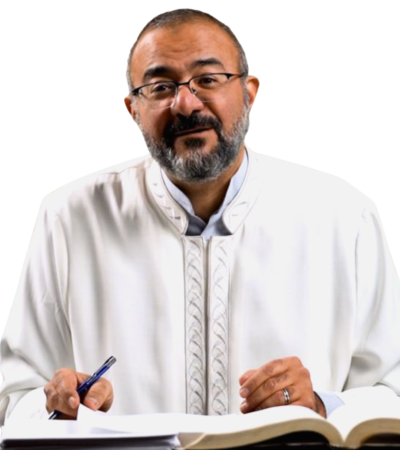
PROF. DR. JASSER AUDA
Professor of Islamic Law and Maqasid Studies
Professor Fellow

Prof. Jasser Auda is a leading contemporary scholar of Islamic thought whose intellectual project seeks to renew the very architecture of Islamic scholarship through a maqāṣid-based vision. As the founder of the Maqasid Institute and holder of the Al-Shatibi Chair for Maqasid Studies, his work advances a systemic methodology that reorients law, ethics, and public life toward the higher objectives of the Qur’an and the Prophetic tradition.

Formed through both classical and modern pathways—having memorised the Qur’an and studied in the circles of Al-Azhar Mosque, and later earning doctorates in the philosophy of Islamic law and systems analysis—his scholarship bridges revelation and complexity, tradition and systems thinking . This rare synthesis defines his intellectual contribution: the articulation of maqāṣid not as static principles, but as a dynamic, interconnected framework for reform.

His academic journey spans institutions across the globe, from Canada and the Middle East to Southeast Asia and beyond, reflecting a truly transnational engagement with Islamic thought. Through more than twenty-five books—many translated into numerous languages—he has shaped contemporary discourse on maqāṣid, governance, and the future of Islamic jurisprudence.

In his work, law is not merely interpreted; it is re-envisioned. Knowledge becomes a living system—one that, when guided by purpose, aspires toward justice, mercy, and the flourishing of human civilisation.

  • PhD in Philosophy of Islamic LawUniversity of Wales, United Kingdom
  • PhD in Systems AnalysisUniversity of Waterloo, Canada
  • Traditional Islamic StudiesAl-Azhar Mosque (study circles), Egypt
  • Qur’an Memorisation (Hifz) — Early foundational education in Islamic sciences
Article Publications
2025 Toward a Maqāṣid-Based Legal Reform: systemic thinking for social transformation. Indonesian Journal of Islamic Law, 8(2), pp. 209–228.
2025 Rethinking Islamic law for Europe: the concept of the Land of Islam. In: Imams in Western Europe, pp. 39–49.
2025 Maqasid for re-envisioning Islamic higher education and sustainability. Islamic Finance and Sustainable Development, pp. 8–27.
2025 Maqasid as a basis for an integrated framework and methodology. Journal of Contemporary Maqasid Studies, 4(1), pp. 1–20.
2022 Re-envisioning Islamic scholarship: Maqasid methodology as a new approach. Claritas Books.
2022 Opening remarks by Editor-in-Chief (Arabic). Journal of Contemporary Maqasid Studies, 1(1), pp. v–viii.
2022 Methodological aspirations: opening remarks by Editor-in-Chief. Journal of Contemporary Maqasid Studies, 1(1), pp. i–iv.
2022 Opening remarks by Editor-in-Chief (Malay). Journal of Contemporary Maqasid Studies, 1(1), pp. xxiii–xxviii.
2022 Maqasid methodology: guide for researchers in maqasid research network. Journal of Contemporary Maqasid Studies, 1(1), pp. 1–30.
2022 Maqasid methodology for re-envisioning Islamic higher education. Journal of Contemporary Maqasid Studies, 1(1), pp. 31–58.
2022 How do we realise Maqasid al-Shariah in practice. Retrieved June 30.
2021 The concept of civil state in Islamic juridical tradition. International Research Journal of Islamic Civilization, pp. 46–67.
2020 The Objectives of Islamic Law: promises and challenges of Maqasid al-Shari'a. Bloomsbury Publishing.
2020 Maqasid al-Shariah: a beginner’s guide (Ukrainian edition). IIIT.
2020 Moral status of organ donation and transplantation in Islamic law. Transplantation Direct, 6(3), e536.
2018 Issues in fatwas on orphan care and legal adoption. IIIT Fiqh Forum.
2018 The Objectives of Islamic Law: promises and challenges. (Edited volume).