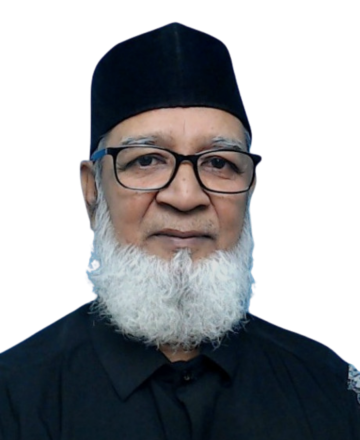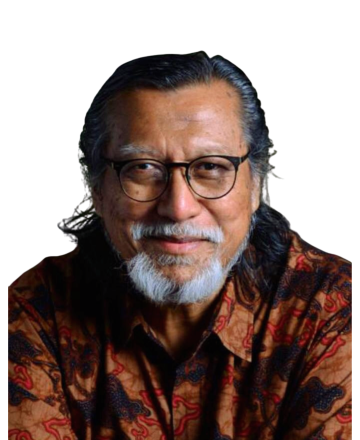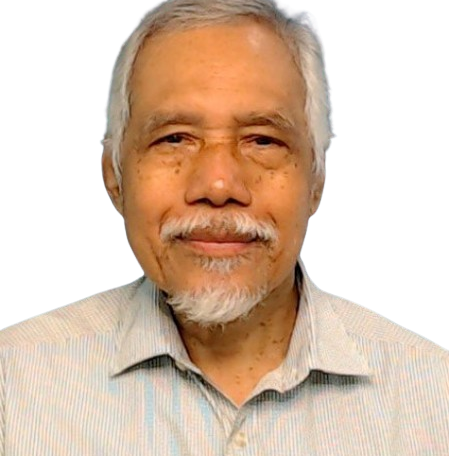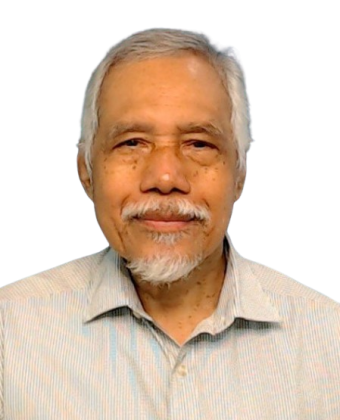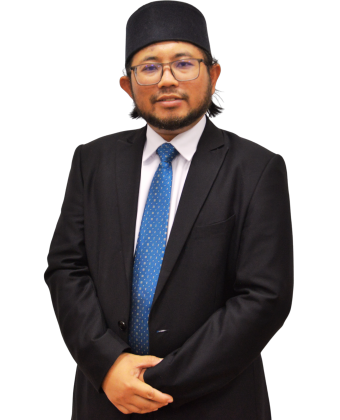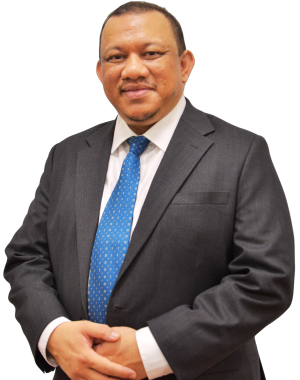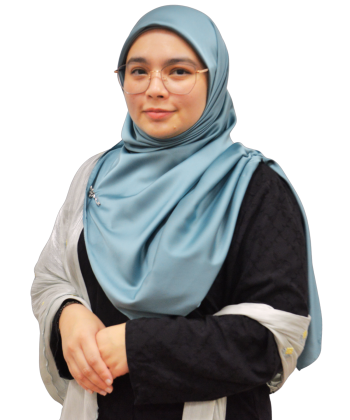

DATUK ASSOC. PROF. DR. WAN AHMAD FAUZI
BIN HASHIM @ WAN HUSAIN

Untitled design (46)

DATUK ASSOC. PROF. DR. WAN AHMAD FAUZI
BIN HASHIM @ WAN HUSAIN
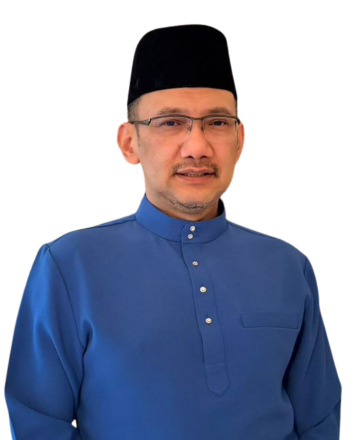
Professor of Malaysian Constitutional Law

Datuk Assoc. Prof. Dr. Wan Ahmad Fauzi Wan Husain is a scholar of law and civilisation whose intellectual labour is devoted to the recovery of sovereignty—both juridical and epistemic—within the Malay world. Trained as an advocate and solicitor of the High Court of Malaysia, and later refined through academic inquiry, his journey bridges the courtroom, the corridors of governance, and the contemplative space of scholarship.

His work is most profoundly expressed in the articulation of Jurisprudens Watan and Fiqh al-Watan—frameworks that seek to re-anchor constitutional understanding within indigenous history, Malay sovereignty, and a Tawhidic vision of knowledge. In his writings and public interventions, law is not merely codified order, but a living inheritance, shaped by memory, authority, and moral purpose.

Having served royal institutions, legal bodies, and corporate leadership, his experience lends his scholarship both authority and immediacy. His seminal contributions on the sovereignty of the Malay Rulers and constitutional structure have earned national recognition, including multiple National Book Awards and the distinction of Tokoh Buku Negara.

In his thought, the nation is not an abstraction, but a trust—watan as both land and meaning—calling for a jurisprudence that restores dignity, continuity, and the ethical foundations of governance in a postcolonial world.

  • Doctor of Philosophy – Doctor of Philosophy, Universiti Kebangsaan Malaysia (UKM)
  • Master of Philosophy – Masters Degree, Universiti Kebangsaan Malaysia (UKM)
  • Bachelor of Laws [Second Class (Upper) Honours – Bachelor Degree, International Islamic University Malaysia

Article Publications
2026 British tiada hak memindahkan wilayah Pulau Pinang. Dewan Masyarakat.
2026 Falsafah kontinum jurisprudens watan merungkai sekularisme. Utusan Malaysia.
2026 Fiqh al-Watan sebagai satu kerangka konseptual. Utusan Malaysia.
2026 Fiqh al-Watan tapis warisan kolonial. Berita Harian.
2026 Fiqh al-Watan for ethical governance in halal supply chains. BITARA, 9(2), pp. 19–37.
2026 Jurisprudens watan dan penyahjajahan ilmu kolonial. Dewan Masyarakat.
2026 Membina Malaysia moden dengan jiwa. Utusan Malaysia.
2026 Menangkis naratif penjajahan de facto di Pahang. Utusan Malaysia.
2026 Etika tadbir urus bertaraf dunia. Dewan Masyarakat.
2026 PoCFAM asas pembinaan Fiqh al-Watan. Utusan Malaysia.
2026 Salasilah Raja Pemerintah Pahang dan Perlembagaan Malaysia. BITARA, 9(1), pp. 23–32.
2025 Comparative analysis of monotheism in Islam and Judaism. BITARA, 8(2), pp. 257–276.
2025 Maqasid worldview of gender roles in Malaysia. BITARA, 8(4), pp. 65–82.
2025 Ijazah Doktor Kehormat Tsukuba. Dewan Masyarakat.
2025 Jurisprudens watan: cabaran dan relevansi. Dewan Masyarakat.
2025 Kedudukan Raja-raja Melayu dalam Perkara 38(4). Dewan Masyarakat.
2025 Kuasa Seri Paduka Baginda dalam demokrasi berparlimen. Berita Harian.
2025 Memahami fiqh al-watan dari aspek kenegaraan. Dewan Masyarakat.
2025 Muslim higher education system in Uganda. BITARA, 8(3), pp. 244–270.
2025 Salah tafsir adat perlembagaan. Utusan Malaysia.
2025 Universal endeavour of leadership. BITARA, 8(2), pp. 281–299.
2025 Watanic jurisprudence as legal methodology. BITARA, 8(4), pp. 332–343.
2024 Al-Sultan Abdullah dan keluhuran Perlembagaan. Dewan Masyarakat.
2024 Colonial framework analysis from Watanic jurisprudence. BITARA, 7(4), pp. 288–300.
2024 Negeri Melayu Pahang tidak dijajah. BITARA, 7(2), pp. 114–140.
2024 Penjajahan dari perspektif jurisprudens watan. Dewan Masyarakat.
2024 RUU Mufti dan keharmonian umat Islam. Utusan Malaysia.
2024 Sultan Ibrahim Iskandar dan Kesultanan Melayu. Dewan Masyarakat.
2024 Role of religious scholars in Terengganu. Malaysian Journal of Syariah and Law, 12(1), pp. 216–227.
2023 Analisis Hukum Kanun Pahang. BITARA, 6(4), pp. 220–233.
2023 Malay States’ rights to continental shelf. Journal of Malaysian Parliament, pp. 170–193.
2023 Legitimacy of Johor Sultanate. BITARA, 6(3), pp. 245–261.
2023 Constitutionality of Section 498 Penal Code. Malaysian Journal of Syariah and Law, 11(2), pp. 405–419.
2023 Constitutional position of continental shelf. Malaysian Journal of Syariah and Law, 11(1), pp. 142–153.

ASSOC. PROF. DR. MOHAMAD NASRIN BIN MOHAMAD NASIR

Untitled design (47)

ASSOC. PROF. DR. MOHAMAD NASRIN BIN MOHAMAD NASIR
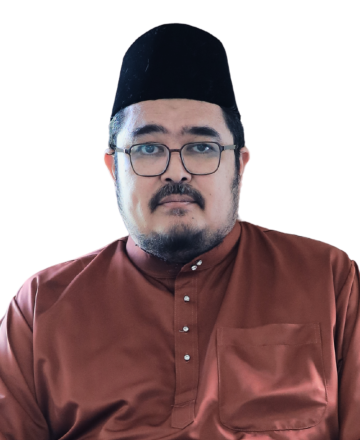
Professor of Philosophy, Theology, and the Islamisation of Knowledge

Assoc. Prof. Dr. Mohamad Nasrin bin Mohamad Nasir is a scholar of Islamic thought whose intellectual path unfolds through the subtle interplay of reason and revelation. Situated within the discipline of religious studies, his work reflects a sustained engagement with philosophy, theology, and the Islamisation of knowledge, where inquiry becomes a form of devotion and understanding a mode of witnessing.

In the classroom, he guides students through courses such as Basic Philosophy and Islamic Worldview, Islam and Other Religions, and Knowledge and Civilisation in Islam, inviting them to inhabit questions that lie at the heart of existence—truth, causality, ethics, and the nature of being . His teaching is marked not by answers alone, but by the cultivation of intellectual humility and depth.

His scholarship engages both classical and contemporary concerns: from Ashʿarite theology and Qur’anic interpretation to interreligious dialogue and the philosophical challenges posed by modernity. As a supervisor, he nurtures inquiries that traverse traditions and disciplines, reflecting a commitment to knowledge that is integrative rather than fragmented.

In his work, one encounters a quiet insistence—that the pursuit of knowledge, when grounded in faith, becomes not merely an academic exercise, but a journey toward coherence, wisdom, and the rediscovery of meaning in an age of uncertainty.

  • Ph.D Islamic Thought – Doctor of Philosophy, International Islamic University Malaysia
  • MA Islamic Studies – Masters Degree, ICAS & Central Middlesex University
  • Bsc.Hons – Bachelor Degree, Brunel University
Article Publications
2026 The miracle is me: Leibniz and the Ash’arite conception of causality. Al Hikmah International Journal of Islamic Studies and Human Sciences, 9(1), pp. 18–43.
2023 A study of the reinterpretation of the Quran in a seventeenth-century Malay Sufi text by al-Raniri. Islamic Studies, 62(4), pp. 453–469.
2023 Book review: Wahhabism and the rise of New Salafist: theology, power & Sunni Islam. The Muslim World Book Review, 43(3), pp. 54–56.
2023 Toleration and justice: two important ingredients for societal harmony. New Straits Times.
2023 Toleration and justice: two important ingredients for societal harmony. The New Straits Times.

PROF. DR. JAMAL AHMED BASHIER BADI

Untitled design (45)

PROF. DR. JAMAL AHMED BASHIER BADI
Professor of Creative Thinking to Critical Thinking from Western and Islamic Perspectives

Prof. Dr. Jamal Ahmed Bashier Badi is a scholar whose intellectual vocation is anchored in the rediscovery of thinking as an act of faith. His work unfolds at the intersection of usul al-din, da‘wah, and the philosophy of knowledge, where the Qur’an is approached not only as revelation, but as a living pedagogy of inquiry, reflection, and creativity.

Formed through studies in both the sciences and Islamic scholarship—from Portland State University to the Islamic University of Madinah—his academic journey reflects a synthesis of analytical discipline and spiritual depth. Over decades at the International Islamic University Malaysia, he has cultivated a distinctive field of thought: creative and critical thinking from an Islamic perspective .

In the classroom, he invites students into a world where questioning is not doubt, but devotion—where the Qur’anic call to tafakkur becomes a method of knowing and being. His writings, including Creative Thinking: An Islamic Perspective and Islam: The Spirit of Creativity, seek to awaken the intellect as a trust, entrusted with both understanding and transformation.

As a supervisor and mentor, he has guided generations of scholars in exploring the epistemic foundations of belief, interpretation, and human cognition. His work stands as a reminder that true thinking, when rooted in revelation, becomes not merely intellectual exercise, but a path toward wisdom.

  • Doctor of Philosophy in Usuluddin – Doctor of Philosophy, Islamic University of Medina
  • Master in Usuluddin – Masters Degree, Islamic University of Medina
  • Bachelor of Science – Bachelor Degree, Portland State University
  • Bachelor in Dakwah & Usuluddin – Bachelor Degree, Islamic University of Medina
Article Publications
2025 A comparative visual framework of Prophet Adam’s narratives. IJRISS, 9(25), pp. 318–322.
2025 Fundamental thinking terms in the Qur’an: a framework for Islamic epistemology. Al-Shajarah, 30(2), pp. 313–354.
2025 Critical thinking in the dialogues of Prophet Ibrahim. Journal of Islamic Studies and Academic Research, 20(114), pp. 309–350.
2024 Quranic analysis of gender in Islamic and Western paradigms. MAQOLAT, 2(2), pp. 70–86.
2024 The challenge to Mahmoud Abu Rayyah on hadith narration. Journal of Hadith Studies, 9(2), pp. 1–10.
2023 Foundations of indicative interpretation in Risālat al-Nūr. Al-Hikmah, 6(2), pp. 249–269.
2023 Evolution of Sufi matters throughout the centuries. Journal of Islamic Contemporary Studies, 4(1), pp. 18–44.
2023 Issues of theology between Muhammad Abduh and Rashid Rida. IJMWS.
2023 Origins of the modern state: historical and political analysis. Al-Hikmah, 6(1), pp. 190–229.
2022 Role of masjid in networking in the era of globalization. Al-Hikmah, 5(4), pp. 71–88.
2022 Metaphor in the Qur’an. Al-Risalah, 6(1), pp. 62–86.
2021 Conceptual thinking from Western and Islamic perspectives. Al-Itqan, pp. 165–191.
2020 Pondering Qur’anic remembrance and its effects. Tadabbur Journal, pp. 1–31.
2020 IIUM experience in teaching Qur’anic thinking methods. Journal of Islam in Asia, 17(4), pp. 372–400.
2019 Measuring creativity and risk-taking levels in language learning. IJICC, 7(12), pp. 218–236.
2018 Qur’anic inquisitive mindset and its ethical foundations. Journal of Islam in Asia, 15(1), pp. 183–203.
2017 Prophetic thinking model for leadership. Journal of Islam in Asia, 14(3), pp. 249–270.
2017 Questioning styles in the Qur’an and human thinking. Intellectual Discourse, pp. 553–574.
2015 Barriers to tafakkur from Islamic perspective. IIUM Unity Journal.
2013 Effects of priming on Muslim behavior. IJAST, 3(8), pp. 21–27.
2011 Qur’anic thinking terminologies and intellectual development. IJACMSD, 2(1), pp. 41–54.
2008 Teaching creative thinking skills: IIUM experience. Journal of Islam in Asia, 5(1), pp. 169–188.
2005 IIUM experience in teaching creative thinking. Islamiyat al Ma'rifah, pp. 167–182.

PROF. DR. IMTIYAZ AHMED SHAUKAT ALI YUSUF

Untitled design (44)

PROF. DR. IMTIYAZ AHMED SHAUKAT ALI YUSUF
Professor of Islam in Southeast Asia

Prof. Dr. Imtiyaz Ahmed Shaukat Ali Yusuf is a scholar of rare vocation, one who dwells at the delicate frontier where faiths meet—not in contest, but in conversation. His intellectual life is devoted to the study of Islam in Southeast Asia, particularly within the textured landscapes of Thailand, where religion, culture, and identity interweave in subtle harmony.

Grounded in Islamic Studies yet expansively interdisciplinary, his work draws from religion, history, and the social sciences to illuminate the deeper possibilities of coexistence. For over three decades, he has taught across continents—from the United States to Southeast Asia—forming not only students, but sensibilities attuned to empathy, dialogue, and intellectual openness .

His scholarship centres on Muslim–Buddhist relations, an area he has helped define with both scholarly precision and moral imagination. Through his writings and teaching, he invites a rethinking of religious encounter—not as boundary, but as bridge; not as difference alone, but as shared ethical horizon.

As a supervisor, he guides inquiries into interreligious understanding, identity, and globalisation, always anchored in the maqāṣid of dignity and peace. In his work, knowledge becomes a form of encounter—where understanding is not merely achieved, but cultivated, patiently, across traditions and time.

  • Doctor of Philosophy – Doctor of Philosophy, Temple University, Philadelphia
Article Publications
2025 The Muslim ethno-religiouscape of Thailand can be accommodated peacefully. Melbourne Asia Review.
2025 The role of the Faculty of Islamic Sciences at Prince of Songkla University in building Islamic public value. Halduskultuur, 24(1), pp. 75–101.
2024 Mahmoud Ayoub and Christian-Muslim relations. Oxford Research Encyclopedias.
2023 Bridging tradition and modernity in Thai Islam: Surin Pitsuwan’s roles. Al-Shajarah, 28(1), pp. 119–142.
2022 Nūr Muḥammadī and Amitābha Buddha: a comparative theological perspective. Buddhist-Christian Studies, 42, pp. 347–358.
2021 PAS in Malaysian politics: Tuan Guru Nik Aziz’s leadership. Ulumuna, 25(1), pp. 108–136.
2020 Reflections on the Lotus Sutra. Buddhist-Christian Studies, 40, pp. 79–104.
2020 Sanctity of human life and abortion in Islam and Buddhism. ĪQĀN, pp. 27–38.
2020 Shaykh Ahmadou Bamba: a peacemaker for our time. Al-Shajarah, 25(1), pp. 210–214.
2019 Book review: Muslim-Christian engagement in the twentieth century. Islamic Studies, 58(1), pp. 155–158.
2019 The nabi-rasul in Arabian religious tradition. Islamic Studies, 58(4), pp. 519–533.

PROF. DR. KHALIQ AHMAD

Untitled design (43)

PROF. DR. KHALIQ AHMAD
Professor of Economics, Business, and Management from an Islamic Perspective

Prof. Dr. Khaliq Ahmad is a scholar of management whose intellectual vision rests upon the ethical architecture of Islam, where governance, leadership, and economic life are reoriented toward higher purpose. His work inhabits the intersection of corporate governance, Islamic management, and sustainable development, seeking not merely efficiency, but moral coherence in organisational life.

With a career spanning decades of teaching, supervision, and editorial stewardship, he has cultivated a body of scholarship that bridges theory and praxis. His writings—ranging from Islamic banking and finance to leadership models grounded in prophetic principles—reflect a sustained commitment to integrating spirituality with institutional responsibility .

As an educator, he engages students in courses that traverse Islamic socio-political thought, sustainability, and the renewal (islah and tajdid) of civilisation. His supervision of doctoral research extends across continents and concerns, from workplace ethics to Islamic finance, each inquiry guided by the maqāṣid al-sharīʿah as a living framework.

Honoured for his scholarly contributions and service, his intellectual legacy is not confined to publications or awards. It lies in his enduring effort to humanise management—reminding us that leadership, when rooted in values, becomes a trust; and that institutions, when guided by ethics, may yet serve as instruments of justice and dignity.

  • Ph.D in Commerce and Management – Doctor of Philosophy, Aligarh Muslim University
  • Master of Philosophy (M.Phil.) – Masters Degree, Aligarh Muslim University
  • Master of Commerce – Masters Degree, Aligarh Muslim University
  • Bachelor in Comp.Sc. – Bachelor Degree, Aligarh Muslim University
Article Publications
2026 Good governance and strong institutions in achieving sustainability for the benefit of society. Journal of Islamic Management Studies, 9(1), pp. 145–155.
2026 Legal literacy as a tool for preserving human dignity in the workplace. BITARA, 9(1), pp. 138–151.
2026 Legal literacy for all: a grassroots approach to policy reform. BITARA, 9(1), pp. 138–149.
2026 The role of Islamic banks to support halal industry in Indonesia. JIESBI, 3(1), pp. 25–47.
2025 Case study of SABIC: Saudi company producing petrochemicals. Journal of Integrated Sciences, 5(1), pp. 334–356.
2025 Deprived of Islamic financing in India: an empirical study. Al-Amwal, 17(2), pp. 120–141.
2025 Editorial notes. Journal of Islamic Management Studies, 8(1), pp. 3–5.
2025 From Meccan persecution to modern Islamophobia. BITARA, 8(1), pp. 411–428.
2025 Muslim higher education system in Uganda. BITARA, 8(3), pp. 244–270.
2024 Islamic-supported model for work-life balance (MH4S). JIMS, 7(1), pp. 18–25.
2024 Editorial notes. Al-Shajarah, Special Issue, pp. 1–10.
2024 Editorial notes. Journal of Islam in Asia, Special Issue.
2024 Empowering Muslim students in India. JIMS, 7(2), pp. 83–104.
2024 Corporate governance and zakat trust: NU Indonesia case. Paper Asia, 40(5b), pp. 61–75.
2023 Integrating Shariah-based training methods in hospitals. JIMS, 6(2), pp. 56–66.
2022 History and growth of Islamic management thought. JIMS, 5(2), pp. 47–57.
2020 Prophetic leadership model: management perspective. AFKAR, 4(1), pp. 1–18.
2019 Business excellence in Bangladesh hotel industry. IJCHM, 31(4), pp. 1836–1856.
2019 Fintech acceptance among asnaf in Selangor. Journal of Islamic Finance, Special Issue, pp. 35–46.
2018 Corporate governance and leadership from Islamic perspective. IJET, 7(4.29), pp. 25–27.
2017 Islamic microfinance impact in Pakistan. Al-Shajarah, Special Issue, pp. 265–296.
2016 Islamic microfinance branchless banking in Indonesia. Intellectual Discourse, pp. 409–433.
2015 Corporate governance for Islamic banking sustainability. Al-Shajarah, pp. 1–17.
2014 Organizational citizenship behaviour from Islamic perspective. MMR, 49(1), pp. 55–66.
2013 Managing from Islamic perspectives in Malaysian organisations. EJBM, 5(11), pp. 10–16.
2012 Servant leadership from the Muslim perspective. MMR, 47(1&2), pp. 77–91.
2011 Islamic leadership principles at IIUM. IIUM Journal of Economics and Management.
2010 Online banking acceptance in Malaysia. MMR, 45(2), pp. 1–14.
2009 Advertising practices under Shariah observation. Indian Journal of Marketing, 39(5), pp. 35–40.
2004 Allocation norms and perceived fairness in Malaysian corporate management. IJCM, 14(2), pp. 15–31.

PROF. DATO’ DR. AHMAD MURAD BIN MOHD NOOR MERICAN

Event Promotion (IG) - 2026-05-06T083953.118

PROF. DATO' DR. AHMAD MURAD BIN MOHD NOOR MERICAN
Professor of Social and Intellectual History
Director of the Centre for Malay-Islamic Civilisational Studies (CMICS-ISTAC)

Prof. Dato’ Dr. Ahmad Murad bin Mohd Noor Merican is a scholar of social and intellectual history whose work moves between memory and meaning, tracing the contours of the Malay-Islamic world with both critical clarity and civilisational depth. At ISTAC-IIUM, his scholarship reflects a lifelong engagement with journalism, epistemology, and the history of ideas, where the written word becomes both archive and argument.

Educated in political science and mass communication in the United States, and later in the history and philosophy of science in Malaysia, his intellectual formation bridges disciplines and geographies. Across more than two dozen books—including Media History, Tanah Air, and Countering the Western Canon—he interrogates the dominance of inherited narratives while seeking alternative ways of knowing rooted in the Malay-Islamic experience .

His writing extends beyond the academy into the public sphere, where essays, columns, and reflections become acts of intellectual intervention. Whether examining colonial memory, media ethics, or the idea of Tanah Air, his work insists that knowledge is never neutral—it is lived, contested, and reclaimed.

In his scholarship, history is not merely remembered; it is reimagined as a field of consciousness, where past and present converge in the search for a more meaningful future.

  • PhD (History and Philosophy of Science) – Doctor of Philosophy, Universiti Malaya (UM)
  • MA (Mass Communication) – Masters Degree, Minnesota
  • BA (Political Science) – Bachelor Degree, Minnesota
  • Dip in Mass Communication (Journalism) – Diploma, Institut Teknologi Mara
Article Publications
2026 The transmission of Japanese ideas and the formation of Mahathir Mohamad’s leadership thought. JARSBS, 43(1), pp. 37–43.
2025 Asean media for civilisational consciousness. New Straits Times.
2025 Dialog sebagai lautan global: Majid Tehranian, Laluan Sutera dan komunikasi. Dewan Masyarakat, pp. 58–59.
2025 Ethics in the digital age: exploring ethical challenges of technology. JISDT, 7(1), pp. 29–50.
2025 Iran: Statecraft, loneliness and geography. Bebasnews.
2025 Jenamakan media Melayu jika mahukan bahasa Melayu diperkasa. Bebas News.
2025 Journalistic fraternity and ethical representation of Islam in Nigeria. Al-Hikmah, 8(4), pp. 1–30.
2025 Majlis Media Malaysia harus berpaksi keadilan. Malaysia Tribune.
2025 Mencari dan meneliti jawi peranakan. Dewan Masyarakat.
2025 Mitos berkecuali ilmu sosiologi dan genosid di Gaza. Bebas News.
2025 Naratif Baharu Bahasa: Menjenamakan Semula Bahasa Melayu. Dewan Masyarakat.
2025 Penggunaan bahasa Melayu: diplomasi kancil, gerak harimau. Dewan Masyarakat.
2025 Persoalan Samad melalui Pak Sako. Jurnal Kewartawanan, 1(1), pp. 231–245.
2025 Rumi and the Tanah Air: lost in translation and transition. Apakhabartv.
2025 Sociology cannot be neutral when genocide stares us in the face. New Straits Times.
2025 The story of Pulau Penyengat and Syed Shaykh al-Hady. Apakhabartv.
2025 The West's fading credibility. New Straits Times.
2024 A. Samad Ismail di sebalik Memoir Pak Sako. Bebas News.
2024 Teaching journalism, genocide and the need for a new charter. Apakhabartv.
2024 Barack Obama dan Rishi Sunak: mereka telah jadi orang putih. Bebas News.
2024 Early ideas on reform through journalism in the Malay Archipelago. Al-Shajarah, pp. 249–262.
2024 Media Barat mekanisme genosid di Gaza. Bebas News.
2024 Memahami semula kod etika wartawan di Malaysia. Bebas News.
2024 Merentasi sejarah tiga negara: A Samad Ismail. Bebas News.
2024 Soalan-soalan yang tidak dijawab oleh A Samad Ismail. Bebas News.
2024 Surat terbuka: Deklarasi Gombak berkaitan genosid. Apakhabartv.
2024 Tanah air dan rantau berpisah tiada. Akademika, 94(3), pp. 530–543.
2023 45 years after 'Orientalism'. New Straits Times.
2023 Aim for inclusivity and reasonableness. New Straits Times.
2023 Art in cultural diplomacy. New Straits Times.
2023 Art in Islam: translation of ideas to form. New Straits Times.
2023 Beginnings of modern history studies in Malaysia. Sejarah, 32(1), pp. 111–127.
2023 Colonialism in the Malay Archipelago. JHSSSEA, 179(2), pp. 275–278.
2023 Genosid di Gaza: koyak dan bakar buku. Bebas News.
2023 Indonesia unmoved by Dutch apology. New Straits Times.
2023 Malay studies needs a new narrative. New Straits Times.
2023 Menyimpan sejarah dalam bungkusan. CETERA, pp. 11–22.
2023 Not remembering the past but aiming for progress. New Straits Times.
2023 Orwell and Islamophobia. New Straits Times.
2023 Tanah Air: spirit, expression, geography. Apakhabartv.
2023 The British Museum operates by plunder. New Straits Times.
2023 The consciousness of Turkiye in Malaysia. Al-Shajarah, 28(2), pp. 281–313.
2023 Translating ideas into form. New Straits Times.
2023 UiTM communication school merger. Apakhabartv.
2023 We've not done justice to Ibn Khaldun. New Straits Times.
2023 Writing Kedah history. Bebas News.

EMERITUS PROF. DATUK DR. OSMAN BIN BAKAR

8757-removebg-preview

EMERITUS PROF. DATUK DR. OSMAN BIN BAKAR
Holder of Al-Ghazali Chair of Epistemology and Civilisational Studies and Renewal
Rector of IIUM

Emeritus Prof. Datuk Dr. Osman bin Bakar stands as one of the foremost intellectual architects of contemporary Islamic thought, a scholar whose work traverses the delicate frontiers between science, philosophy, and civilisation. As the holder of the Al-Ghazali Chair at ISTAC-IIUM, his scholarship reflects a lifelong meditation on the nature of knowledge—its sources, its hierarchies, and its ultimate purpose.

Trained in Islamic philosophy at Temple University, his intellectual journey has unfolded across institutions of global distinction, including the University of Malaya, Universiti Brunei Darussalam, and Georgetown University. In each, he has sought not merely to teach, but to rearticulate the epistemic foundations of a civilisation .

Author of over forty books and hundreds of articles, his works—most notably Classification of Knowledge in Islam and Tawhid and Science—have become touchstones in the discourse on Islamic science and philosophy. His writings are marked by a rare synthesis: analytical precision joined with a contemplative vision that seeks unity in multiplicity.

Recognised among the world’s most influential Muslim thinkers, and honoured with national titles, his legacy is not confined to accolades. It resides in his enduring effort to restore the sacred dimension of knowledge, reminding the modern world that true understanding is inseparable from wisdom.

  • Philosophy in Sciences – Doctor of Philosophy, Temple University, Philadelphia
  • Mathematics (Algebra) – Masters Degree, Univesity of London
  • Mathematic – Bachelor Degree, University of London
Article Publications
2025 ‘Bedah siasat’ surah Al-Saff demi kebaikan umat Islam. Utusan Malaysia, pp. 14.
2025 Kebijaksanaan diplomasi Anwar dan ASEAN. Sinar Harian.
2025 Kebijaksanaan diplomasi Anwar, ASEAN angkat negara dan serantau. Berita Harian, pp. 12.
2025 The shepherding notion of al-imārah: abstracting the authoritative worldview of the Semitic root ʼmr. Al-Shajarah, 30(1), pp. 55–89.
2024 Anwar Ibrahim’s the Asian renaissance revisited. Al-Shajarah, 29(2), pp. 399–408.
2024 The Qur'an's opening chapter: its epistemological significance for scientific exegesis. Al-Shajarah, 29(2), pp. 247–298.
2023 Abul Kalam Azad’s idea of religious pluralism. Al-Shajarah, 28(2), pp. 343–365.
2023 Afghan and Pakistani Taliban: a comparative study. Al-Shajarah, 28(2), pp. 259–280.
2023 Beza Hadhari Abdullah Badawi dengan Madani Anwar Ibrahim. Sumberkini.
2023 Central Asian Waqf studies: a literature review. Al-Shajarah, 28(1), pp. 97–117.
2023 Colonialism in the Malay Archipelago: civilisational encounters. JHSSSEA, 179(2), pp. 275–278.
2023 Khonghucu dan Kebudayaan Tiongkok di Asia Tenggara. International Media.
2023 Misinterpretations of syariah may lead to violence. New Straits Times.
2023 Muhammad the ultimate leader (book review). Al-Shajarah, pp. 190–196.
2023 My Say: addressing the lacuna in youth education. The Edge Malaysia.
2023 My Say: Islam and youth empowerment in Malaysia Madani. The Edge Malaysia.
2023 The genesis of Islamic science revisited. Al-Shajarah, 28(1), pp. 175–185.
2023 The middle way is antidote to extremism. New Straits Times.
2022 Book review: Science and Philosophy in the Indian Buddhist Classics (Vol. 2). Al-Shajarah, 27(1), pp. 200–204.
2022 Religious authority, Iftā’ culture, and sectarianism in Pakistan. Al-Shajarah, 27(1), pp. 53–75.
2022 Scientific history in pre-modern civilizations: a critical review. Al-Shajarah, 27(2), pp. 351–369.
2021 Book review: Science and Philosophy in the Indian Buddhist Classics (Vol. 1). Al-Shajarah, 26(1), pp. 136–140.
2021 Syed Ahmad Khan’s twin objectives of educational reforms. Al-Shajarah, 26(1), pp. 49–70.
2020 Covid-19 and Darwin: a response to Pervez Hoodbhoy. Emotional and Psychological Support.
2020 Interreligious dialogues in Malaysia. Oxford Islamic Studies Online.
2020 Issues of Hindu-Muslim relations in the works of Syed Ahmad Khan. Al-Shajarah, 25(2), pp. 315–334.
2020 The link between coronavirus and Darwin: a critical response. Intellectual Discourse, 28(2), pp. 365–386.

ASSOC. PROF. DR. KHAIRIL HUSAINI BIN JAMIL

ASSOC. PROF. DR. KHAIRILHUSAINI BIN JAMIL

ASSOC. PROF. DR. KHAIRIL HUSAINI BIN JAMIL
Deputy Dean of Postgraduate, Research & Innovation

Assoc. Prof. Dr. Khairil Husaini bin Jamil is a scholar whose intellectual journey unfolds within the luminous traditions of Qur’anic and hadith sciences, where text, meaning, and being converge. As an associate professor at the International Islamic University Malaysia, his work reflects a sustained engagement with Islamic epistemology, theosophy, and the deeper architecture of revealed knowledge.

Formed in the scholarly circles of the Islamic University of Madinah and later refined at SOAS, University of London, his training bridges classical mastery and critical inquiry. His early immersion in manuscript studies—working with the handwritten legacy of Ibn Hajar al-Asqalani—cultivated in him a sensitivity to the textures of tradition, while his later research on al-Khatib al-Baghdadi deepened his exploration of Sunni epistemology .

His scholarship is marked by both preservation and renewal: editing classical texts, advancing methodologies in hadith studies, and proposing integrative frameworks such as the triadic approach of riwāyah, dirāyah, and riʿāyah. Across languages and disciplines, he writes and lectures with an awareness that knowledge is not merely accumulated, but cultivated.

In his work, one finds a quiet but persistent aspiration—to recover the harmony between intellect and revelation, and to rearticulate that harmony for a world in search of meaning.

  • Doctor of Philosophy in Near and Middle Eastern Studies – Doctor of Philosophy, University of London
  • Master in Sciences of Prophetic Traditions – Masters Degree, Islamic University of Medina
  • Bachelor of Hadith Sciences and Islamic Studies – Bachelor Degree, Islamic University of Medina
  • Diploma in Philosophy and Research Methodology – Diploma, Namaa Academy for Islamic Studies and Humanities
Article Publications
2026 On living hadîts: a new trend of hermeneutics approach to study hadîts in Indonesia. Miqot, 50(1), pp. 128–145.
2025 The shepherding notion of al-imārah: abstracting the worldview of the Semitic root ʼmr. Al-Shajarah, 30(1), pp. 55–89.
2025 Questioning and questions in Islam and their importance. Al-Zahra, 22(1), pp. 39–62.
2024 Between Traditionalising and Futuring: applying the broader maqasid paradigm to hadith studies. APJEE, 39(2), pp. 183–196.
2024 Exploring the impact of scientific advancements on hadith commentaries. IJIT, 26, pp. 136–145.
2024 Maqashid sunnah as a foundation for progressive Islamic education in the digital era. PROGRESIVA, 13(1), pp. 35–56.
2024 Journey to Islamicisation of human knowledge (book review). Asiatic, 18(1), pp. 135–139.
2024 The interplay between religion and science: the experience of Islamic discourse. IJR, 5(1), pp. 253–263.
2024 The problem of “Transmit from the Children of Israel…” and its solutions. Al-Hikmah, 7(2), pp. 456–505.
2024 Features of Fiqh al-ʿIlm in Hadith literature. Dirasat Islamiyyah, 19(1), pp. 67–84.
2023 Exploring the concept of “kalimāt” in the Quran and hadith. JSSH, 6(6), pp. 10–16.
2023 Sufi-Salafi scholarship in Maghribi: ʿAbd Allāh al-Talīdī. Islamiyyat, 45(1), pp. 111–124.
2023 The “Right to Life” in UDHR and Islamic sources. UMRAN, 10(3), pp. 41–55.
2022 Corruption and hypocrisy in Malay Muslim politics. Asiatic, 16(1), pp. 165–168.
2022 Editorial remark. al-Burhān Journal, 6(1–2).
2022 Muslim entrepreneurs: between the roots and the fruits. eTIJARI, 2(10).
2022 Muslims in the post-pandemic world. JSSH, 5(5), pp. 10–15.
2022 Report on International Conference on Islamic Spiritual Care. Intellectual Discourse, 30(2), pp. 431–433.
2022 European sources of gunnery knowledge in Islamic texts. Al-Shajarah, 27(2), pp. 263–288.
2022 Who moved my sanad? Journal of Qur'an and Hadith Studies, 11(1), pp. 1–18.
2021 Editorial remarks. al-Burhān Journal, 5 (multiple issues).
2021 The emergence of the Sunni school of Kufa. Al-Hikmah, 4(3), pp. 99–115.
2020 Early Sunnī historiography: Khalīfa b. Khayyāṭ. Ilahiyat Studies, 11(2), pp. 326–329.
2020 Book review: Metodologi penyelidikan dalam pendidikan. Intellectual Discourse, 28(1), pp. 353–356.
2020 Rabi Al-Awwal: the month of momentous events. Islamicity.org.
2020 Reasserting the maqāṣid of Islamic knowledge curricula. al-Burhān Journal, 4(2), pp. 1–26.
2019 Islamic scriptures and voice intonation. KEMANUSIAAN, 26(Supp.1), pp. 1–21.
2019 Isnad and tajrid methodology in hadith literature. al-Burhān Journal, 3(1), pp. 76–105.
2019 Muḥaddithīn practices in education. Journal of Islamic Educational Research, 4(1), pp. 31–41.
2018 Ḥadīth, piety and law (book review). Intellectual Discourse, 26(1), pp. 263–267.

ASSOC. PROF. DR. MOHD. NOH BIN ABDUL JALIL

ASSOC. PROF. DR. MOHD. NOHBIN ABDUL JALIL

ASSOC. PROF. DR. MOHD. NOH BIN ABDUL JALIL
Deputy Dean of Student Development and Community Engagement

Assoc. Prof. Dr. Mohd. Noh Bin Abdul Jalil is a scholar of quiet depth whose intellectual journey unfolds at the confluence of religion, civilisation, and the Malay world. His work reflects a sustained engagement with the historical and philosophical currents that have shaped Islamic thought across time, particularly in Southeast Asia.

Specialising in comparative religion, da‘wah, and the Islamisation of knowledge, he navigates classical Malay texts and early scholarly traditions with both precision and reverence. His scholarship revisits the encounters between Islam and other faiths, illuminating how meaning, belief, and identity were negotiated in the Malay Archipelago between the 14th and 17th centuries .

In the classroom, he teaches courses such as Islamic Da‘wah and World Religions, where students are invited into a reflective dialogue between past and present. His teaching is not merely instructional, but formative—cultivating intellectual humility and a deeper awareness of religious plurality.

As a researcher and supervisor, he continues to guide inquiries into theology, interfaith understanding, and the enduring relevance of classical scholarship in contemporary life. His work, at once historical and forward-looking, speaks to a larger aspiration: that knowledge, when rooted in wisdom, becomes a bridge—between traditions, between communities, and ultimately, between hearts.

  • Doctor of Philosophy in Islamic Revealed Knowledge & Heritage (Usul Al-Din & Comparative Religion) – Doctor of Philosophy, International Islamic University Malaysia

  • Usul Ad-Din and Comparative Religion – Masters Degree, International Islamic University Malaysia
  • Fiqh and Usul Al-Fiqh – Bachelor Degree, International Islamic University Malaysia

Article Publications
2024 HAMKA’s interpretation on interfaith marriage: its relevance in Malaysia. Journal of Islam in Asia, 21(3), pp. 207–228.
2024 Synthetic human embryos, embryo models and embryo-like structures in Islam. Theology and Science, 22(4), pp. 790–815.
2023 Hamka's discourse on Christianity in Tafsīr al-Azhar. Al-Itqan, 8(2), pp. 93–120.
2023 Ketepi perbezaan pertahan jati diri bangsa. Berita Harian, pp. 11.
2022 Digital entrepreneurship and da’wah opportunities. e-TIJARI, 2(05).
2022 Promoting diversity via local wisdom. IIUM Today.
2022 The role of mass media as a channel to learn about Islam among Muslims in Gombak. Intellectual Discourse, 30(1), pp. 187–212.
2022 The Role of Mass Media As A Channel To Learn About Islam Among Muslims In Gombak. Intellectual Discourse, 30(1), pp. 187–212.
2022 Youth and mosque: exploring the views of youth on mosque activities in Gombak, Selangor. Al-Itqan, 6(1), pp. 131–149.
2021 Exploring the views of mosque committee members on mosque religious education programs in Gombak. Millah, 21(1), pp. 183–216.
2021 Integrated education in Kerala: the pioneering role of Sayyed Ismail Shihabuddin Pookkoya Thangal. MANU, 32(2), pp. 61–72.
2021 Internationalisation of the Islamic thought: the contributions of Sayyed Ismail. Jurnal ‘Ulwan, 6(3), pp. 1–13.
2021 The discourse of Islam and other religions by early ʿulamā’ in the Malay world. AFKAR, 23(2), pp. 311–338.
2021 The notion of afterlife in Islam and Sikhism and its implications. Al-Itqan, 5(2), pp. 117–135.
2021 The role of mosque committee in empowering mosque educational programmes. Journal of Islam in Asia, 18(3), pp. 165–187.
2020 Comparative study between Risale-i Nur and Tafsīr al-Azhar’s methodology in Quranic exegesis. Journal of Islam in Asia.
2020 Examining the role of ‘ulamā in the Islamization process of the Malay world. Intellectual Discourse, 28(1), pp. 61–76.
2020 Halal Quality Management System: A comparison between Halal and Kosher. Al-Itqan, 4(1), pp. 88–115.
2020 Nur al-Din al-Raniri’s commentaries on other religions in the Malay world. Journal of Al-Tamaddun, 15(1), pp. 147–155.
2019 Discourse on eschatology of religions other than Islam in 17th century Malay texts. Journal of Islam in Asia, 16(Special Issue), pp. 221–236.
2019 Politico-cultural-religious milieu of Southeast Asia. KEMANUSIAAN, 26(Supp.1), pp. 109–129.
2018 Nationhood and loyalty in Islam. Al-Itqan, 1(Special Issue), pp. 7–18.
2017 Abū Al-Ḥasan Al-Masʻūdī on pre-Islamic Arab religions and belief. Intellectual Discourse, 25(2), pp. 357–380.
2017 An overview on early ulamas’ representations of other religions. Jurnal Al-Abqari, 11, pp. 7–19.
2017 Religious scholars and political leaders in classical Malay texts. Umran, 4(3), pp. 35–42.
2017 الإبداع عند أبي الحسن المسعودي في دراسة تاريخ الأديان. Journal of Islam in Asia, 14(3), pp. 161–187.
2015 The roles of the Malay in the process of Islamization of the Malay World. International Journal of Nusantara Islam, 2(2), pp. 11–20.

DR. SH FATIMAH ALZAHRAH BINTI SYED HUSSEIN

DR. SH FATIMAH ALZAHRAH BINTI SYED HUSSEIN

DR. SH FATIMAH ALZAHRAH BINTI SYED HUSSEIN
Deputy Dean of Academic and Internationalisation

Dr. SH Fatimah Alzahrah binti Syed Hussein is a distinguished sociologist and academic leader, serving as Deputy Dean of Academic and Internationalisation. Her scholarship moves at the intersection of sociology, gender, and community life, guided by a quiet conviction that knowledge must ultimately return to society in the form of care, dignity, and transformation.

In the classroom, she traverses disciplines with intellectual grace, teaching courses such as Sociology of Marriage and Family, Advanced Sociological and Anthropological Theories, and Economy and Society. Here, ideas are not merely transmitted but awakened—students are invited to see the social world with both critical clarity and ethical depth . As a supervisor, she has accompanied many postgraduate journeys, shaping inquiries into women’s empowerment, religion, and lived experiences of inequality.

Her research attends to the subtle yet urgent textures of society—menstrual health, social cohesion, and the resilience of marginalized communities. Whether examining post-pandemic realities or the labour trajectories of Muslim women, her work carries both analytical precision and human concern .

A prolific writer, she bridges scholarship and advocacy, her voice resonating across academic and public spheres. Recognised with awards including a Gold Award for Women Empowerment, she remains deeply engaged in scholarly communities, both local and global.

  • Doctor of Philosophy in Sociology – Doctor of Philosophy, Victoria University of Wellington
  • Bachelor of Human Sciences in Sociology and Anthropology – Bachelor Degree, International Islamic University Malaysia
Article Publications
2025 Faith in action: educating for peace, justice, and human dignity. Islamicity.
2025 Ummatic mind as a weltanschauung in postmodern society. IIUM Today.
2024 ‘Women in Action’ towards social entrepreneurial innovation and sustainable ventures for social good. IIUM Today.
2024 Book review: Best Laid Plans: Women Coming of Age in Uncertain Times by Jessica Halliday Hardie. Contemporary Sociology, 53(3), pp. 252–253.
2024 Encouraging women's empowerment: a qualitative analysis on household food waste management in Bangladesh utilizing 5R approach. Saudi Journal of Humanities and Social Sciences, 9(8), pp. 238–251.
2024 Freedom of expression in unpredictable times: stakeholders' perceptions of Malaysia's track record in the 3rd UPR cycle. Journal of Diplomacy and Foreign Relations, 21(1).
2024 Investigating the menstrual health practices and needs of Rohingya women refugees living in Malaysia. Current Trends in Biotechnology and Pharmacy, 18(3S), pp. 161–176.
2024 Making care a priority to strengthen and support family institutions in Malaysia. IIMU Bulletin, 5, pp. 16–17.
2024 SOCA 2320 and ENGL 1330 students support PPR Sg. Bonus families. IIUM Today.
2024 SOCA academics at Posyandu of Desa Cileles, Jatinagor, West Java for fieldwork. IIUM Today.
2023 ‘We’re not hysterical’ – A call for action on the gender pain gap in Malaysia. The Star, pp. 1–8.
2023 Kemelut kemiskinan haid yang berpanjangan. Dewan Kosmik, 31(03), pp. 5–9.
2023 Realising accepted UPR recommendations: challenges and realities in Malaysia’s commitment to enforce freedom of expression. SINERGI, 3(1), pp. 66–81.
2021 Apa itu kemiskinan haid dan 4 cara anda boleh membantu!. SuciCup.
2021 Focus on working together. The Star.
2021 Kemiskinan haid: krisis kesihatan awam yang perlu diakhiri. IJCWED, 14, pp. 109–112.
2021 Memperkasakan keusahawan sosial produk menstruasi bagi membasmi kemiskinan haid. IJCWED, 14, pp. 41–47.
2020 Expressing breastmilk while on break and in private: a qualitative study of Malaysian first-time mothers. Community, Work & Family.
2020 Gender equality benefits all. The Star.
2020 Lifting taboo on menstruation. The Star Online.
2020 Preservation of the intellect: developing research skills among IIUM undergraduates. Journal of Society and Media, 4(2), pp. 262–278.
2019 The fading birth practice: urban Malay mothers negotiating confinement practice. IIUM Journal of Human Sciences, 2(1), pp. 10–18.
2018 Poverty, women’s empowerment and social entrepreneurship among B40 urban women in Malaysia. Opcion, 34(16), pp. 559–564.