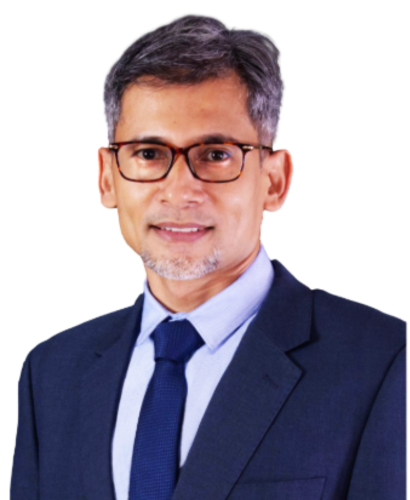

PROF. DR. SULEYMAN DERIN

Untitled design (61)

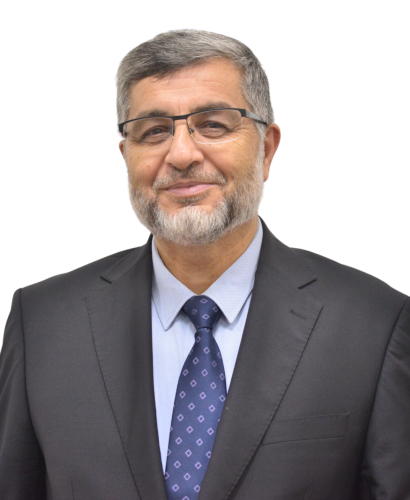
PROF. DR. SÜLEYMAN DERIN
Professor of Sufism, and the Psychological Dimensions of Islam
Visiting Professor

Prof. Süleyman Derin is a scholar of Sufism whose work dwells in the subtle interior of Islamic thought, where theology meets the language of the heart. Born in Kütahya, Türkiye, he was formed within the scholarly tradition of Marmara University, where he completed his undergraduate and master’s studies in theology, before extending his intellectual journey to the University of Leeds.

His doctoral research—centred on the evolving paradigms of divine love from Rābiʿa al-ʿAdawiyya to Ibn al-Fāriḍ—set the tone for a career devoted to uncovering the inner dimensions of Islam. His scholarship moves between classical Sufi texts and contemporary inquiry, exploring not only metaphysical doctrines but also the psychological and transformative aspects of faith.

Now a full professor in the Department of Sufism at Marmara University, he teaches the history of Sufism, Sufi tafsīr, and the encounter between Islamic spirituality and modern intellectual currents. His writings illuminate the enduring relevance of Sufi concepts—love, purification, and knowledge of the self—as pathways toward ethical and spiritual refinement.

Through his teaching and research, Prof. Derin invites a deeper reflection: that beyond doctrine lies experience, and beyond knowledge lies transformation—where the study of Sufism becomes, ultimately, a journey inward.


  • PhD in Arabic and Middle Eastern StudiesUniversity of Leeds, United Kingdom
  • Master of Arts in TheologyMarmara University, Türkiye

  • Bachelor of Arts in TheologyMarmara University, Türkiye
Article Publications
2024 Al-Ghazali’s concept of diseases of the spiritual heart and its relevance to DSM-5-TR diagnosis. Journal of Religion and Health, 63(1), pp. 490–514.
2021 İşârî tefsirlerde Hz. Nuh. Tasavvuf İlmi ve Akademik Araştırma Dergisi, 24(47), pp. 279–309.
2011 Benedict’in “The Rule” eseri çerçevesinde ruhbanlık ve tekke hayatı. Tasavvuf, 12(27), pp. 219–252.
2010 Şamlı bir sûfî: Şeyh Arslan Dımaşkî ve tevhîd risâlesi. Tasavvuf, (26), pp. 91–124.
2009 The self and the other in Ibn Arabi and Rumi. Tasavvuf, (23), pp. 109–130.
2009 Sîmurg’a yolculuk. Din ve Hayat, (2), pp. 30–33.
2006 Tasavvufun Orta Asya’da yakın geçmişteki rolü: Kırgızistan örneği. Tasavvuf, (16).
2005 The tradition of sulh among the Sufis. Journal of Academic Studies.
2003 Annemarie Schimmel’in tasavvufun kökenlerine dair görüşleri. Tasavvuf, 4(11), pp. 519–526.
2001 Gazzâlî’de Allah sevgisi. Tasavvuf, 2(5), pp. 143–159.
2001 Tasavvufi yolda ilerlemeye engel olarak evlilik ve manevi evlilik. Tasavvuf, 2(6), pp. 211–226.
2000 The origins of the term “Sufi”. Tasavvuf, 2(4), pp. 107–114.

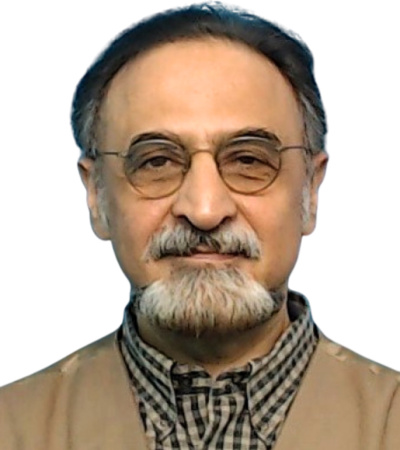
DATO’ PROF. DR. NOOR INAYAH BINTI YA’AKUB

Dato-Prof-Dr-Noor-Inayah-Yaakub

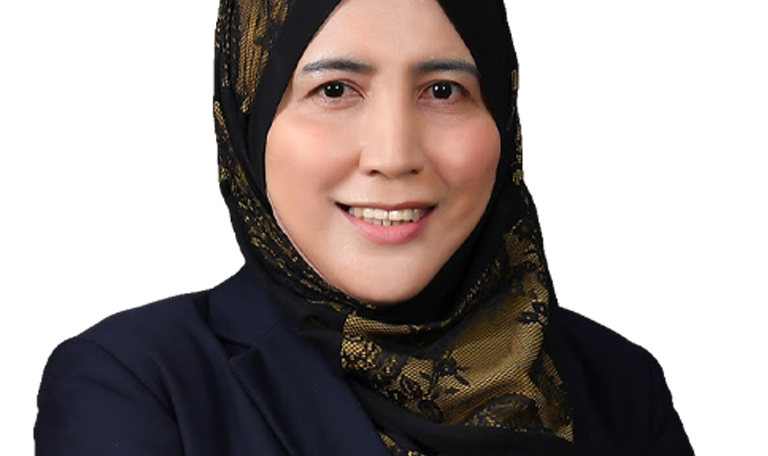
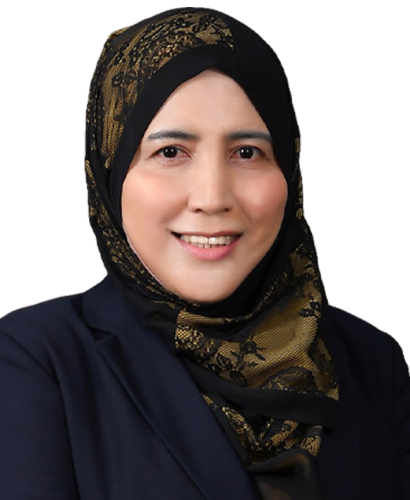
DATO' PROF. DR. NOOR INAYAH BINTI YA'AKUB
Professor of Civil and Sharīʿah Law
Adjunct Professor

Dato’ Prof. Dr. Noor Inayah binti Yaakub is a scholar of law and a transformative leader in higher education, whose work is guided by a rare synthesis of intellectual rigor and social compassion. Trained in both civil and Sharīʿah law at the International Islamic University Malaysia, and later refined through postgraduate studies in the United Kingdom at the University of Bristol and the University of Manchester, her academic journey reflects a deep commitment to bridging legal traditions and advancing knowledge with purpose.

Her leadership career has been marked by institutional transformation. As former President and Vice Chancellor of Infrastructure University Kuala Lumpur and Chief Executive Officer of Baitulmal Professional College, she championed access to quality education for B40 communities, expanding opportunities in professional and accredited fields. Under her stewardship, education became not merely a pathway to employment, but a vehicle for dignity and empowerment.

Currently leading UCMI, she advances a vision encapsulated in her guiding ethos—Live to Give—where institutions serve as spaces of inclusion, compassion, and intellectual growth. Her initiatives supporting asnaf, mualaf, and underserved students reflect a philosophy of education grounded in care and responsibility.

Beyond academia, her roles in corporate governance and national institutions reflect a breadth of trust and influence. Yet, at the heart of her work remains a simple conviction: that knowledge, when guided by empathy, can reshape lives, communities, and futures yet to unfold.

  • PhD in LawUniversity of Manchester, United Kingdom 
  • Master of Laws (Comparative Civil & Banking Law)University of Bristol, United Kingdom
  • Bachelor of Laws (LLB)International Islamic University Malaysia, Malaysia
  • Bachelor of Shariah LawInternational Islamic University Malaysia, Malaysia

Professional & Executive Certifications:

  • Advanced Certificate (Technology Transfer & Project Management) — University of Oxford (2009)
  • QS Apple Asia-Pacific Professional Leaders in Education Certification (2009)
  • United Nations Professional Certificate in Higher Education Strategic Planning (2012)
  • Advanced Certificate in Innovation & Strategy for Higher Education — University of Cambridge (2019)

She is also professionally qualified as:

  • Advocate & Solicitor of the High Court of Malaya
  • Certified Syariah Lawyer (Negeri Sembilan)

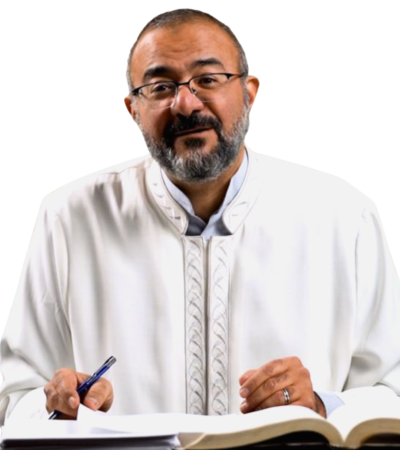
PROF. DR. FARISH A. NOOR

Untitled design (57)

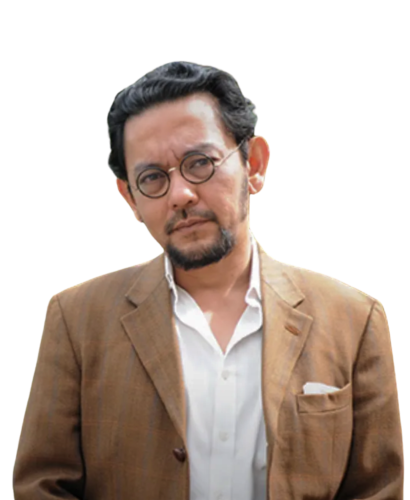
PROF. DR. FARISH A. NOOR
Professor of Philosophy, Southeast Asian Studies, and Political Theory
Professor Fellow

Prof. Dr. Farish A. Noor is a historian and political thinker whose work probes the deep structures of power, identity, and knowledge in Southeast Asia. Born in George Town, Penang, his intellectual journey has been shaped by a sustained engagement with colonial discourse, religio-political movements, and the making of modern societies.

Educated in philosophy, Southeast Asian studies, and political theory—culminating in a doctorate from the University of Essex—his scholarship traverses disciplines with rare fluency. His work interrogates how colonial knowledge systems constructed the region, and how these legacies continue to inform contemporary politics and identity .

Across appointments in Europe and Asia, including research roles in Berlin, Leiden, Singapore, and Kuala Lumpur, he has cultivated a transnational perspective on Southeast Asian history. His writings—spanning monographs, essays, and public commentary—recover marginalised voices while critically examining the narratives that shaped empire and nation.

Beyond academia, he has brought history to wider audiences through documentary series such as Our Southeast Asia and Across Borders, where scholarship meets storytelling. His intellectual concerns extend to material culture, from manuscripts to artefacts, reflecting a deep interest in how meaning is inscribed not only in texts, but in objects and images.

In his work, history becomes critique—a lens through which the past unsettles the present, and invites new ways of understanding the world.

  • PhD in Governance and PoliticsUniversity of Essex, United Kingdom
  • MA in South-East Asian StudiesSchool of Oriental and African Studies, United Kingdom
  • MA in PhilosophyUniversity of Sussex, United Kingdom
  • BA in Philosophy & LiteratureUniversity of Sussex, United Kingdom
Article Publications
2024 ‘Time’ in the time of empire: linear time in late colonial capitalism. Intellectual Discourse, 32(1).
2023 Before Westphalia: imagining an alternative Asian globalization. Muslim Politics Review, 2(2), pp. 140–162.
2023 Discovering ‘religion’: colonial attitudes towards identity in Southeast Asia. Journal of Intercultural Studies.
2023 Denying and deflecting the racism of empire: the ‘malevolent native’ trope. Al-Shajarah.
2022 Ras, kuasa, dan kekerasan kolonial di Hindia Belanda. Kepustakaan Populer Gramedia.
2022 The appendices of empire: reading colonial writings in entirety. SEJARAH Journal, 31(1).
2021 Colonial-capitalism and natural resources in colonised world. IJISS, 2(3), pp. 139–144.
2021 Tablighi Jama’at movement in Southeast Asia: piety in motion. Routledge Handbook, pp. 323–334.
2021 Racial difference and colonial wars in Southeast Asia. Amsterdam University Press.
2021 The long shadow of the 19th century: colonial orientalism in Southeast Asia. Matahari Books.
2021 The uses of magic: local knowledge and colonial narratives in Malaya. JMBRAS, 94(2), pp. 97–119.
2020 COVID-19 and Tablighi Jama’at: need for dialogue. RSIS Commentaries.
2020 The keris as marker of identity in post-colonial Singapore. Beyond Bicentennial, pp. 287–304.
2020 Art and performance in locating Southeast Asia today. Performing Southeast Asia, pp. 275–285.
2019 Data-gathering in colonial Southeast Asia 1800–1900. Amsterdam University Press.
2019 Locating Asia and epistemology of knowledge. ISEAS Publications.
2019 Re-reading colonial texts as confessional writings. South East Asia Research, 27(1), pp. 74–96.
2018 America’s encounters with Southeast Asia (1800–1900). Amsterdam University Press.
2018 An imperial divorce: colonial discourse in Southeast Asia. Cultural Studies.
2017 Media narratives and colonial conflict in Quallah Battoo. Media Syari’ah, 16(1), pp. 255–286.
2017 Reclaiming Southeast Asia’s shared histories. ERIA.
2016 Epistemic arrest and colonial image reproduction. South East Asia Research, 24(2), pp. 185–203.

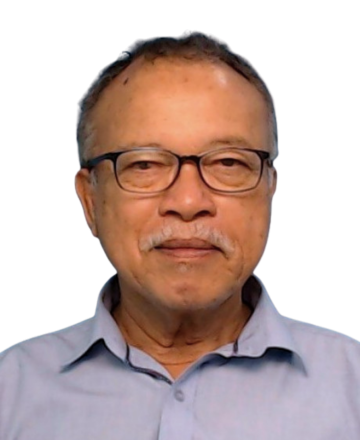
PROF. DR. KHAIRUDIN ALJUNIED

Untitled design (56)

PROF. DR. KHAIRUDIN ALJUNIED
Professor of Islam in Southeast Asia
Professor Fellow

Prof. Dr. Khairudin Aljunied is a historian of ideas whose scholarship traverses the intellectual currents of Southeast Asia and the wider Muslim world. Trained at the School of Oriental and African Studies, his work is anchored in intellectual history yet expands across sociology, political thought, theology, and cultural studies—reflecting a mind attuned to the many dimensions of civilisation.

At the International Institute of Islamic Thought and Civilization, he serves as Professor of Islam in Southeast Asia, while maintaining global scholarly engagements, including his role at the Georgetown University. His academic journey has taken him through distinguished appointments—from Columbia University as a Fulbright scholar to universities across Southeast Asia—marking a career shaped by transnational dialogue and intellectual exchange.

His research explores the entanglements between Southeast Asia and global Islam, recovering voices, texts, and movements that illuminate the region’s cosmopolitan heritage. Through more than a dozen books and numerous articles, he has traced the lives of thinkers, reformers, and traditions that continue to shape Muslim societies.

Recognised among The World’s 500 Most Influential Muslims (2024–2026), his work invites a deeper reflection: that history is not merely past, but a living conversation—one that connects regions, redefines identities, and reimagines the possibilities of thought in a shared world.

  • PhD in HistorySchool of Oriental and African Studies, United Kingdom
Article Publications
2025 Muslim youth and cosmopolitanism in the blogosphere. In: Muslim Youth in Southeast Asia, pp. 51–67.
2025 Return of liminality: Singapore Malay-Muslim return migrants from Australia. Citizenship Studies.
2025 Globalising the history of Singapore. Singapore in Global History, pp. 11–25.
2025 The global effects of an ethnic riot: Singapore, 1950–1954. Singapore in Global History, pp. 173–194.
2025 Contemplating Sufism: dialogue and tradition across Southeast Asia. Wiley-Blackwell.
2025 Arab-Turko-Persianate and Malay world relations: past, present, and future. Asian Perspective, 49(3), pp. 427–450.
2024 Republicanism, Communism, Islam: review. Journal of the American Academy of Religion, 92(4), pp. 674–676.
2024 Sufi warriorism in Muslim Southeast Asia. Sociology Lens, 37(4), pp. 502–516.
2024 Beyond academic dehumanisation: neoliberalism and the ‘good university’ in Malaysia. Palgrave Handbook, pp. 55–73.
2024 The official Indonesian Qurʾān translation: review. Journal of Islamic Studies, 35(2), pp. 278–280.
2024 Muslim cosmopolitanism in Southeast Asia: marketplaces as sites of interaction. Southeast Asian Islam, pp. 167–185.
2024 Islamic law in circulation: review. Journal of Islamic Studies, 35(1), pp. 94–97.
2023 Islam and the drive to global justice. Lexington Books.
2023 Muslim intellectuals and global justice. Bloomsbury.
2023 Reflections on the Islamization of knowledge. Al-Shajarah.
2022 Reason and rationality in Southeast Asia: Harun Nasution. Malay-Indonesian Islamic Studies, pp. 294–326.
2022 Rehabilitating the Shari‘a: Ahmad Ibrahim and legal reform. The Muslim World, 112(4), pp. 387–403.
2022 Introduction: Rethinking Islam in Southeast Asia. Routledge Handbook, pp. 1–10.
2022 Malay-Muslim immigrants in Australia in the age of Islamophobia. Journal of Muslim Minority Affairs, 42(1), pp. 41–55.
2022 Shapers of Islam in Southeast Asia. Oxford University Press.
2021 Islam as therapy: Zakiah Daradjat and psychology. Indonesia and the Malay World, 49(143), pp. 106–125.
2021 Embodying adaptive boundaries: Muslim women in Australia. Journal of Islamic and Muslim Studies, 6(2), pp. 113–136.
2021 Bringing rationality back: Harun Nasution’s thought. Journal of Islamic and Muslim Studies, 6(1), pp. 29–55.
2019 Islam in Malaysia: an entwined history. Oxford University Press.
2018 Hamka and Islam: cosmopolitan reform in the Malay world. Cornell University Press.
2016 Muslim cosmopolitanism: Southeast Asian Islam in comparative perspective. Edinburgh University Press.

PROF. DR. AMIR HOSSEIN ZEKRGOO

Untitled design (55)

PROF. DR. AMIR HOSSEIN ZEKRGOO
Professor of Islamic and Oriental Arts
Professor Fellow

Prof. Amir Hossein Zekrgoo is a scholar-artist whose intellectual and creative life unfolds across the luminous intersections of art, spirituality, and civilisation. Trained as both a practitioner and historian of Islamic and Oriental arts, his work moves fluidly between studio and scholarship—where brush, script, and image become vessels of meaning.

With nearly three decades of teaching, he has shaped generations of students in painting, calligraphy, and photography, while advancing deeper inquiries into the symbolic and metaphysical dimensions of art. His scholarship extends across Persian mystical literature, comparative religion, and the aesthetics of sacred traditions, reflecting a rare synthesis of visual sensitivity and philosophical depth .

Educated in fine arts, Indian art, and manuscript studies across institutions in the United States, India, and beyond, his intellectual formation is profoundly trans-cultural. Fluent in multiple classical and modern languages, he navigates textual and artistic traditions with ease, drawing connections between worlds often studied in isolation.

Currently affiliated with the University of Melbourne, International Institute of Islamic Thought and Civilization, and University of Tehran, his work continues to explore the enduring dialogue between art and the sacred.

In his scholarship, art is not merely aesthetic—it is contemplative: a language through which the visible gestures toward the unseen, and form becomes a reflection of meaning itself.

  • Fine ArtsUniversity of Kansas, United States
  • Indian Art StudiesUniversity of Delhi, India
  • Islamic Manuscripts & Monumental InscriptionsNational Museum Institute of Art History, Conservation and Museology, India

    In addition to his formal education, he pursued extensive studies in:

    • Classical Persian, Arabic, and Islamic artistic traditions
    • Comparative religion and Oriental arts
    • Multiple languages including Persian, Arabic, Turkic, Urdu, Hindi, Sanskrit, and Malay
  •  
Article Publications
2025 Mastur: The veiled legacy of a forgotten 18th-century female Iranian poet. Al-Shajarah, 30(1), pp. 211–229.
2025 Discoveries from a miniature manuscript: a 16th-century volume of Hafez’s ghazals. Al-Shajarah, 30(2), pp. 532–542.
2024 The confused whale of the China Sea: water symbolism in Hamzah Fansuri’s works. Al-Shajarah, 29(1), pp. 79–98.
2024 Persian marriage contract of an Indian Sufi emperor: Southeast Asian fate of the last Mughal. Al-Shajarah, 29(2), pp. 409–435.
2024 Devotional poetry in manuscript terminology: Golzār-e Ṣafā. Al-Shajarah, 29(1), pp. 207–222.
2023 Trans-nationalism and civilisational identity: Rumi on land, language, and love. Al-Shajarah, 28(1), pp. 73–96.
2022 Introduction to Persian seals: devotional seals in an 18th-century manuscript. Al-Shajarah, 27(1), pp. 151–170.
2020 ‘Treasures of sciences in the lovely realm of sights’: study of āmulī’s manuscript. Al-Shajarah, 25(1), pp. 163–189.
2020 Illustrated manuscript findings from Nāmī’s Laylī wa Majnūn & Khosrow wa Shīrīn. Al-Shajarah, 25(2), pp. 335–359.
2018 Form and content: assessment of a 17th-century illustrated Shahnameh manuscript. Al-Shajarah, 23(1), pp. 41–65.
2017 Rise of eclecticism in 21st-century Malaysian mosque architecture. Planning Malaysia, 15(1), pp. 295–304.

PROF. DR. JASSER AUDA

Untitled design (54)

PROF. DR. JASSER AUDA
Professor of Islamic Law and Maqasid Studies
Professor Fellow

Prof. Jasser Auda is a leading contemporary scholar of Islamic thought whose intellectual project seeks to renew the very architecture of Islamic scholarship through a maqāṣid-based vision. As the founder of the Maqasid Institute and holder of the Al-Shatibi Chair for Maqasid Studies, his work advances a systemic methodology that reorients law, ethics, and public life toward the higher objectives of the Qur’an and the Prophetic tradition.

Formed through both classical and modern pathways—having memorised the Qur’an and studied in the circles of Al-Azhar Mosque, and later earning doctorates in the philosophy of Islamic law and systems analysis—his scholarship bridges revelation and complexity, tradition and systems thinking . This rare synthesis defines his intellectual contribution: the articulation of maqāṣid not as static principles, but as a dynamic, interconnected framework for reform.

His academic journey spans institutions across the globe, from Canada and the Middle East to Southeast Asia and beyond, reflecting a truly transnational engagement with Islamic thought. Through more than twenty-five books—many translated into numerous languages—he has shaped contemporary discourse on maqāṣid, governance, and the future of Islamic jurisprudence.

In his work, law is not merely interpreted; it is re-envisioned. Knowledge becomes a living system—one that, when guided by purpose, aspires toward justice, mercy, and the flourishing of human civilisation.

  • PhD in Philosophy of Islamic LawUniversity of Wales, United Kingdom
  • PhD in Systems AnalysisUniversity of Waterloo, Canada
  • Traditional Islamic StudiesAl-Azhar Mosque (study circles), Egypt
  • Qur’an Memorisation (Hifz) — Early foundational education in Islamic sciences
Article Publications
2025 Toward a Maqāṣid-Based Legal Reform: systemic thinking for social transformation. Indonesian Journal of Islamic Law, 8(2), pp. 209–228.
2025 Rethinking Islamic law for Europe: the concept of the Land of Islam. In: Imams in Western Europe, pp. 39–49.
2025 Maqasid for re-envisioning Islamic higher education and sustainability. Islamic Finance and Sustainable Development, pp. 8–27.
2025 Maqasid as a basis for an integrated framework and methodology. Journal of Contemporary Maqasid Studies, 4(1), pp. 1–20.
2022 Re-envisioning Islamic scholarship: Maqasid methodology as a new approach. Claritas Books.
2022 Opening remarks by Editor-in-Chief (Arabic). Journal of Contemporary Maqasid Studies, 1(1), pp. v–viii.
2022 Methodological aspirations: opening remarks by Editor-in-Chief. Journal of Contemporary Maqasid Studies, 1(1), pp. i–iv.
2022 Opening remarks by Editor-in-Chief (Malay). Journal of Contemporary Maqasid Studies, 1(1), pp. xxiii–xxviii.
2022 Maqasid methodology: guide for researchers in maqasid research network. Journal of Contemporary Maqasid Studies, 1(1), pp. 1–30.
2022 Maqasid methodology for re-envisioning Islamic higher education. Journal of Contemporary Maqasid Studies, 1(1), pp. 31–58.
2022 How do we realise Maqasid al-Shariah in practice. Retrieved June 30.
2021 The concept of civil state in Islamic juridical tradition. International Research Journal of Islamic Civilization, pp. 46–67.
2020 The Objectives of Islamic Law: promises and challenges of Maqasid al-Shari'a. Bloomsbury Publishing.
2020 Maqasid al-Shariah: a beginner’s guide (Ukrainian edition). IIIT.
2020 Moral status of organ donation and transplantation in Islamic law. Transplantation Direct, 6(3), e536.
2018 Issues in fatwas on orphan care and legal adoption. IIIT Fiqh Forum.
2018 The Objectives of Islamic Law: promises and challenges. (Edited volume).

DR. WAN ALI @ WAN YUSOFF BIN WAN MAMAT

Untitled design (51)

DR. WAN ALI @ WAN YUSOFF BIN WAN MAMAT
Doctor of History and Manuscripts in the Malay World
Senior Academic Fellow

Dr. Wan Ali @ Wan Yusoff bin Wan Mamat is a scholar of memory and manuscripts, whose intellectual life has been devoted to the preservation of the written heritage of the Malay world. His journey began not in lecture halls, but in the living archive of the National Library of Malaysia, where he served for over three decades, culminating as Director General—a custodian not only of books, but of civilisation itself.

His transition into academia at the International Islamic University Malaysia did not mark a departure, but a deepening. At ISTAC-IIUM, his scholarship bridges librarianship, history, and Islamic civilisation, focusing on Malay manuscripts, Jawi script, and the ethics of preservation. In his work, the manuscript is not merely text—it is testimony: of intellect, of faith, of a civilisation inscribed across time .

His research and supervision reflect a sustained effort to safeguard and reinterpret this legacy, from cataloguing rare collections to advancing digital preservation. As an educator, he imparts not only technical knowledge, but a sense of responsibility toward heritage and its transmission.

In his scholarship, preservation becomes an act of continuity—ensuring that what was once written in ink may continue to speak, quietly yet enduringly, to future generations.

  • Doctor of Philosophy (Malay Literature) – Doctor of Philosophy, Universiti Kebangsaan Malaysia (UKM)
  • Library & Information Studies – Masters Degree, University of London
  • Bachelor of Arts (Malay Studies) – Bachelor Degree, Universiti Malaya (UM)
  • Diploma in Librarianship – Diploma, University of Wales
Article Publications
2023 Colonialism in the Malay Archipelago: civilisational encounters. Journal of the Humanities and Social Sciences of Southeast Asia, 179(2), pp. 275–278.
2022 From decolonization to ethno-nationalism: a study of Malaysia’s school history syllabuses and textbooks (1905–2020). Al-Shajarah, 27(2), pp. 417–421.
2021 Exploring library management support for enhancing self-directed learning: narratives from research-support librarians. Library Management, 42(8–9), pp. 584–610.
2021 Malaysian research-support librarians’ self-directed learning traits and competencies. Journal of Librarianship and Information Science, 53(4), pp. 630–644.
2017 Psychometric properties of instruments measuring competencies of research support librarians. Man in India, 97(19), pp. 183–194.
2014 Sejarah perkembangan perpustakaan Tan Sri Omar Mohd Hashim. Warkah PSM, 42(14), pp. 5–7.
2013 Accessing Malay manuscripts worldwide through ICT: the union catalogue project. Southeast Asia Library Group Newsletter, (45).
2013 Kutai Inscriptions. Warkah PSM, 37(13), pp. 11–15.
2013 Librarian working with Islamic collections: Malaysian experience. Journal of Information and Knowledge Management, 3(2), pp. 127–133.

DR. NURUL AIN BINTI NORMAN

Untitled design (50)

DR. NURUL AIN BINTI NORMAN
Doctor of Philosophy, Humanities, Education, and Civilisational Studies

Asst. Prof. Dr. Nurul Ain Norman is a philosopher of uncommon breadth, whose intellectual work moves across the landscapes of mind, knowledge, and civilisation with both analytical precision and contemplative depth. At ISTAC-IIUM, she stands at the confluence of philosophy, education, and the humanities, where inquiry is not merely technical, but transformative.

Her scholarship spans applied and comparative philosophy, epistemology, metaphysics, and philosophy of religion, engaging enduring questions on consciousness, belief, and the nature of reality. Yet her work does not remain confined to abstraction; it extends into the design of curricula, the shaping of institutions, and the cultivation of ethical leadership in an age of accelerating change .

Through her research and teaching, she advances the integration of knowledge—seeking coherence between intellectual traditions, disciplines, and civilisational visions. Her writings on Irfānī epistemology, Ibn Sina, and Mulla Sadra reflect a sustained effort to reconnect philosophical inquiry with spiritual insight, bridging classical wisdom and contemporary concerns.

As a scholar and academic leader, she has contributed to research development, editorial work, and international academic discourse, nurturing spaces where thought can flourish with both rigor and purpose. In her work, philosophy becomes more than reflection—it becomes formation: of minds, of institutions, and of futures yet to be imagined.

  • Doctor of Philosophy – Doctor of Philosophy, Universiti Malaya (UM)
  • Master in Philosophy and Islamic Theology – Masters Degree, Mofid University
  • Bachelor in Islamic Theology and Culture – Bachelor Degree, Ferdowsi University of Mashad
Article Publications
2025 Irfānī epistemology and Indonesian Islam: from Jabiri to Neo-Sadra. Ulumuna, 28(2), pp. 738–768.
2025 Philosophy and religion in Abdurrahman Wahid’s post-secular thought. Fikrah, 13(1), pp. 65–80.
2025 Reframing religious experience through Alam al-Mithal. Teosofi, 15(1), pp. 148–171.
2025 The evolution of belief systems and spiritual discovery. Journal of Oriental Studies, 34, pp. 24–57.
2024 al-‘Ulama warasatul anbiya: theological leadership and wasatiyyah. Profetika, 25(2), pp. 317–336.
2024 Bibliometric study of ISTAC-IIUM’s thesis catalog. Al-Shajarah, 29(2), pp. 365–397.
2024 Ethical dimensions of fiqh and maqāṣid al-sharī‘ah. Al-Shajarah, 29(1), pp. 47–77.
2024 Ibn Sina’s contributions to modernity and education. Al-Shajarah.
2024 ICRITC-24 Review proceedings. Special Issue, pp. 337–344.
2024 Knowledge and democracy for reform in Bangladesh. Khazanah Sosial, 6(1), pp. 132–151.
2024 Philosophical values in number theory of Ikhwān al-Ṣafā’. Jurnal Islam Ilmiah Futura, 24(2), pp. 1–19.
2024 Concept of time in Mulla Sadra’s philosophy. JAQFI, 9(2), pp. 93–108.
2024 Quantum science and the Islamic concept of the soul. JCSRS, 1, pp. 78–106.
2024 Development of the soul in early childhood (Ibn Sina model). Al-Afkar, 7(2), pp. 89–104.
2023 Al-'Ilm al-Ḥuḍūrī: epistemology and sufism. Jurnal Fuaduna, 7(2), pp. 111–122.
2023 Rethinking renewal and reform of Islamic thought. ISTAC Highlights, pp. 19.
2021 Ibn Sina’s theory of the soul in Islamic education. Islam and Civilisational Renewal, 12(2), pp. 275–289.

DR. AHMAD EL-MUHAMMADY BIN MUHAMMAD UTHMAN EL-MUHAMMADY

Untitled design (49)

DR. AHMAD EL-MUHAMMADY BIN MUHAMMAD
UTHMAN EL-MUHAMMADY
Doctor of Philosophy (Muslim World Issues)

Dr. Ahmad El-Muhammady bin Muhammad Uthman El-Muhammady is a scholar-practitioner whose intellectual life unfolds at the intersection of thought and security, where ideas are not merely studied but engaged as forces shaping society. As an Assistant Professor at ISTAC-IIUM and Deputy Director at the Peace, Dialogue and Xenophobia Studies Centre (PEDIXS), his work navigates the complex terrains of extremism, governance, and civilisational renewal.

His scholarship is deeply anchored in the study of radicalisation, deradicalisation, and peacebuilding, yet it is distinguished by a rare synthesis of theory and lived experience. For over a decade, he has worked closely with national security institutions—including the Royal Malaysia Police and the Ministry of Home Affairs—contributing to rehabilitation programmes, policy frameworks, and expert testimony in matters of national significance .

Beyond Malaysia, his engagement extends to global platforms, serving as an associate fellow and advisor across international research and policy institutions. His research, teaching, and supervision reflect a commitment to restoring balance (wasatiyyah) in both thought and practice, addressing the roots of extremism while cultivating pathways toward resilience and social harmony.

In his work, knowledge is neither abstract nor distant—it is a responsibility, carried into the public sphere, where understanding becomes intervention, and scholarship becomes a quiet instrument of peace.

  • Doctor of Philosophy (Muslim World Issues) – Doctor of Philosophy, International Islamic University Malaysia
  • Master of Human Sciences (Political Science) – Masters Degree, International Islamic University Malaysia
  • Bachelor of Human Sciences (Political Science) – Bachelor Degree, International Islamic University Malaysia
Article Publications
2026 Integrating Islamic governance ethics into decentralisation in the Maldivian context. Quantum Journal of Social Sciences and Humanities, 7(1), pp. 49–61.
2025 An assessment of the history and causes of radicalisation in West Africa. Journal of History and Social Sciences, 4(1), pp. 35–58.
2025 Exploring radicalisation among Muslims in Ghana: challenges and prospects. Maqolat, 3(2), pp. 133–156.
2024 Confronting extremism and radicalisation in Afghanistan: an educative approach. Al-Tadzkir, 4(1), pp. 1–22.
2024 Governance in zakat within a Muslim minority context: Sri Lanka case study. Sprin Journal of Arts, Humanities and Social Sciences, 3(10), pp. 17–25.
2024 Reconciliation and Islamisation: a roadmap for Islamic intellectual revival. Al-Shajarah, Special Issue, pp. 141–166.
2023 Marital rape in Malaysia: a human rights discourse. Journal of Public Security and Safety, 16(2), pp. 131–151.
2022 Strategic action plans to address deviant teachings in Malaysia. Journal of Public Security and Safety, 13(1), pp. 134–153.
2021 Book review: Islam, liberalism, and ontology. Al-Shajarah, 26(1), pp. 127–132.
2021 Majalah Dabiq as propaganda medium of ISIS ideology. Afkar, 23(2), pp. 339–404.
2021 Rehabilitation & reintegration (R&R): Malaysian experience. Digital Study Visit.
2021 Religious, political, and health radicalisation in Malaysia. Journal of Public Security and Safety, 12(2), pp. 189–212.
2020 Malaysia in the post-IS era. East Asia Forum.
2017 External conflicts and Malaysia's national security: the case of Daesh. Journal of Defence and Security, 8(1), pp. 42–56.
2015 Applying wasaṭīyah within the Malaysian religio-political context. American Journal of Islam and Society, 32(3), pp. 134–140.

ASSOC. PROF. DR. MEHMET OZAY

Untitled design (48)

ASSOC. PROF. DR. MEHMET ÖZAY
Professor of History and Civilisational Studies of the Ottoman and the Malay Archipelago

Assoc. Prof. Dr. Mehmet Özay is a scholar of history and civilisation whose intellectual compass is oriented toward the vast, interconnected worlds of the Ottoman and the Malay Archipelago. His work traverses oceans of memory—linking Istanbul to Aceh, the Bay of Bengal to the Straits of Malacca—where empires, ideas, and identities once met in quiet but profound exchange.

At ISTAC-IIUM, he teaches and researches with a sustained commitment to understanding Islamic revivalism, sustainable development, and the historical consciousness of Muslim societies. His scholarship is distinguished by its archival sensitivity and civilisational scope, particularly in recovering Ottoman–Malay relations and the intellectual life embedded in texts such as al-Jawaib .

His research projects and publications reflect a persistent effort to reframe history not as fragmented episodes, but as a continuum of encounters—between empire and locality, tradition and reform, memory and modernity. Whether examining manuscript collections, colonial transformations, or vernacular journalism, his work restores voice to overlooked narratives and reconnects regions often studied in isolation.

As a supervisor, he guides inquiries that move across disciplines and geographies, nurturing a generation attuned to both historical depth and contemporary relevance. In his scholarship, history becomes more than record—it becomes a space of reflection, where the past speaks quietly to the present.

  • Doctor of Philosophy in Sociology of Religion – Doctor of Philosophy, Marmara University
  • Master of Sociology and Antropology – Masters Degree, Marmara University
  • Bachelor of English Teaching – Bachelor Degree, Marmara University
Article Publications
2026 Meninjau kembali ide T. L. Sinar. Waspada.
2026 When no single power held hegemony: Thomas Bowrey’s account of Bay of Bengal (1669–1679). Medieval and Early Modern Orients.
2025 Intellectual and civilisational dimensions of al-Jawaib based on Ottoman sources. Journal of Al-Tamaddun, 20(1), pp. 1–17.
2025 Agents of empire: British engagement in Malay manuscript collection. Melayu, 18(2), pp. 201–226.
2025 Al-Jawaib tentang Aceh & Kashgar. Waspada.
2025 Post-secularism as a paradigm shift. Habitus, 6(6), pp. 1–34.
2025 Islamic education in Southeast Asia: Indonesia–Malaysia case. Habitus Journal, pp. 53–92.
2025 Türkiye’nin bölge politikası ve Keşmir sorunu. Derin Tarih.
2024 Dua pria terhormat di Istanbul. Waspada.
2024 H. Mohd Said & keadilan buruh. Waspada.
2024 Halide Edib Adıvar dan institusi hukum. Waspada.
2024 India and Indonesia: security orbits in the Indo-Pacific. Politics Today.
2024 Indonesian image of the Ottoman Caliphate (1918–1925). Studia Islamika, 31(2), pp. 281–304.
2024 Isu Palestina dalam tulisan Mohd. Said. Waspada.
2024 Jurnalisme di Aceh: awal kemerdekaan. Waspada.
2024 Mengapa Daulah Uthmaniyah mendanai al-Jawaib?. Waspada.
2024 Mohammad Said dan politik global. Waspada.
2024 Taiwan votes for continuity of sovereignty. Politics Today.
2023 Ottoman manuscript collection in Al-Attas Library. Studia Islamika, 30(2), pp. 235–259.
2023 Iran–Arab Saudi détente and China. Waspada.
2023 FGD Bahas Sosok H Mohammad Said. Waspada.
2023 Indonesia: Nahdlatul Ulama’s global identity. Politics Today.
2023 Mengenang 28 tahun H. Mohd. Said. Waspada.
2023 Journalistic life of Mohammad Said. Journal of Tamaddun, 18(2), pp. 247–262.
2023 Resolving conflicts through peaceful dialogue. New Straits Times.
2023 Retno Marsudi & perubahan paradigma. Waspada.
2023 Sultan Abdul Hamid II and Habib Abd al-Rahman?. Waspada.
2022 Nationalism in Weber’s thought. İnsan & Toplum, 12(3), pp. 25–46.
2022 Mohd. Said, sang patriot pena. Waspada.
2022 Sikap global Türkiye dan G20. Waspada.
2022 Türkiye as role model for developing countries. New Straits Times.