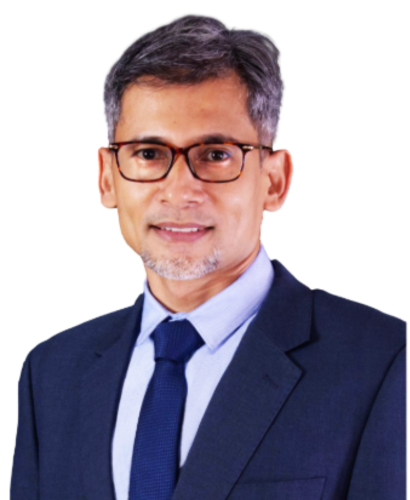

PROF. DR. FARISH A. NOOR

Untitled design (57)

PROF. DR. FARISH A. NOOR
Professor of Philosophy, Southeast Asian Studies, and Political Theory
Professor Fellow

Prof. Dr. Farish A. Noor is a historian and political thinker whose work probes the deep structures of power, identity, and knowledge in Southeast Asia. Born in George Town, Penang, his intellectual journey has been shaped by a sustained engagement with colonial discourse, religio-political movements, and the making of modern societies.

Educated in philosophy, Southeast Asian studies, and political theory—culminating in a doctorate from the University of Essex—his scholarship traverses disciplines with rare fluency. His work interrogates how colonial knowledge systems constructed the region, and how these legacies continue to inform contemporary politics and identity .

Across appointments in Europe and Asia, including research roles in Berlin, Leiden, Singapore, and Kuala Lumpur, he has cultivated a transnational perspective on Southeast Asian history. His writings—spanning monographs, essays, and public commentary—recover marginalised voices while critically examining the narratives that shaped empire and nation.

Beyond academia, he has brought history to wider audiences through documentary series such as Our Southeast Asia and Across Borders, where scholarship meets storytelling. His intellectual concerns extend to material culture, from manuscripts to artefacts, reflecting a deep interest in how meaning is inscribed not only in texts, but in objects and images.

In his work, history becomes critique—a lens through which the past unsettles the present, and invites new ways of understanding the world.

  • PhD in Governance and PoliticsUniversity of Essex, United Kingdom
  • MA in South-East Asian StudiesSchool of Oriental and African Studies, United Kingdom
  • MA in PhilosophyUniversity of Sussex, United Kingdom
  • BA in Philosophy & LiteratureUniversity of Sussex, United Kingdom

Article Publications
2024 ‘Time’ in the time of empire: linear time in late colonial capitalism. Intellectual Discourse, 32(1).
2023 Before Westphalia: imagining an alternative Asian globalization. Muslim Politics Review, 2(2), pp. 140–162.
2023 Discovering ‘religion’: colonial attitudes towards identity in Southeast Asia. Journal of Intercultural Studies.
2023 Denying and deflecting the racism of empire: the ‘malevolent native’ trope. Al-Shajarah.
2022 Ras, kuasa, dan kekerasan kolonial di Hindia Belanda. Kepustakaan Populer Gramedia.
2022 The appendices of empire: reading colonial writings in entirety. SEJARAH Journal, 31(1).
2021 Colonial-capitalism and natural resources in colonised world. IJISS, 2(3), pp. 139–144.
2021 Tablighi Jama’at movement in Southeast Asia: piety in motion. Routledge Handbook, pp. 323–334.
2021 Racial difference and colonial wars in Southeast Asia. Amsterdam University Press.
2021 The long shadow of the 19th century: colonial orientalism in Southeast Asia. Matahari Books.
2021 The uses of magic: local knowledge and colonial narratives in Malaya. JMBRAS, 94(2), pp. 97–119.
2020 COVID-19 and Tablighi Jama’at: need for dialogue. RSIS Commentaries.
2020 The keris as marker of identity in post-colonial Singapore. Beyond Bicentennial, pp. 287–304.
2020 Art and performance in locating Southeast Asia today. Performing Southeast Asia, pp. 275–285.
2019 Data-gathering in colonial Southeast Asia 1800–1900. Amsterdam University Press.
2019 Locating Asia and epistemology of knowledge. ISEAS Publications.
2019 Re-reading colonial texts as confessional writings. South East Asia Research, 27(1), pp. 74–96.
2018 America’s encounters with Southeast Asia (1800–1900). Amsterdam University Press.
2018 An imperial divorce: colonial discourse in Southeast Asia. Cultural Studies.
2017 Media narratives and colonial conflict in Quallah Battoo. Media Syari’ah, 16(1), pp. 255–286.
2017 Reclaiming Southeast Asia’s shared histories. ERIA.
2016 Epistemic arrest and colonial image reproduction. South East Asia Research, 24(2), pp. 185–203.

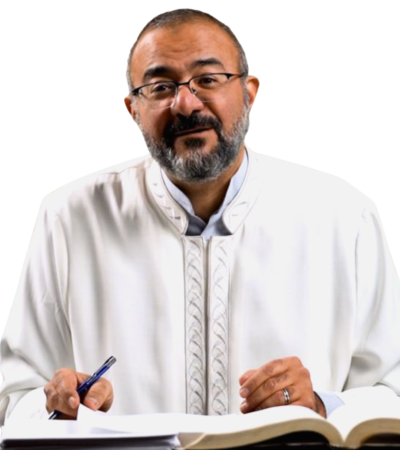
PROF. DR. KHAIRUDIN ALJUNIED

Untitled design (56)

PROF. DR. KHAIRUDIN ALJUNIED
Professor of Islam in Southeast Asia
Professor Fellow

Prof. Dr. Khairudin Aljunied is a historian of ideas whose scholarship traverses the intellectual currents of Southeast Asia and the wider Muslim world. Trained at the School of Oriental and African Studies, his work is anchored in intellectual history yet expands across sociology, political thought, theology, and cultural studies—reflecting a mind attuned to the many dimensions of civilisation.

At the International Institute of Islamic Thought and Civilization, he serves as Professor of Islam in Southeast Asia, while maintaining global scholarly engagements, including his role at the Georgetown University. His academic journey has taken him through distinguished appointments—from Columbia University as a Fulbright scholar to universities across Southeast Asia—marking a career shaped by transnational dialogue and intellectual exchange.

His research explores the entanglements between Southeast Asia and global Islam, recovering voices, texts, and movements that illuminate the region’s cosmopolitan heritage. Through more than a dozen books and numerous articles, he has traced the lives of thinkers, reformers, and traditions that continue to shape Muslim societies.

Recognised among The World’s 500 Most Influential Muslims (2024–2026), his work invites a deeper reflection: that history is not merely past, but a living conversation—one that connects regions, redefines identities, and reimagines the possibilities of thought in a shared world.

  • PhD in HistorySchool of Oriental and African Studies, United Kingdom
Article Publications
2025 Muslim youth and cosmopolitanism in the blogosphere. In: Muslim Youth in Southeast Asia, pp. 51–67.
2025 Return of liminality: Singapore Malay-Muslim return migrants from Australia. Citizenship Studies.
2025 Globalising the history of Singapore. Singapore in Global History, pp. 11–25.
2025 The global effects of an ethnic riot: Singapore, 1950–1954. Singapore in Global History, pp. 173–194.
2025 Contemplating Sufism: dialogue and tradition across Southeast Asia. Wiley-Blackwell.
2025 Arab-Turko-Persianate and Malay world relations: past, present, and future. Asian Perspective, 49(3), pp. 427–450.
2024 Republicanism, Communism, Islam: review. Journal of the American Academy of Religion, 92(4), pp. 674–676.
2024 Sufi warriorism in Muslim Southeast Asia. Sociology Lens, 37(4), pp. 502–516.
2024 Beyond academic dehumanisation: neoliberalism and the ‘good university’ in Malaysia. Palgrave Handbook, pp. 55–73.
2024 The official Indonesian Qurʾān translation: review. Journal of Islamic Studies, 35(2), pp. 278–280.
2024 Muslim cosmopolitanism in Southeast Asia: marketplaces as sites of interaction. Southeast Asian Islam, pp. 167–185.
2024 Islamic law in circulation: review. Journal of Islamic Studies, 35(1), pp. 94–97.
2023 Islam and the drive to global justice. Lexington Books.
2023 Muslim intellectuals and global justice. Bloomsbury.
2023 Reflections on the Islamization of knowledge. Al-Shajarah.
2022 Reason and rationality in Southeast Asia: Harun Nasution. Malay-Indonesian Islamic Studies, pp. 294–326.
2022 Rehabilitating the Shari‘a: Ahmad Ibrahim and legal reform. The Muslim World, 112(4), pp. 387–403.
2022 Introduction: Rethinking Islam in Southeast Asia. Routledge Handbook, pp. 1–10.
2022 Malay-Muslim immigrants in Australia in the age of Islamophobia. Journal of Muslim Minority Affairs, 42(1), pp. 41–55.
2022 Shapers of Islam in Southeast Asia. Oxford University Press.
2021 Islam as therapy: Zakiah Daradjat and psychology. Indonesia and the Malay World, 49(143), pp. 106–125.
2021 Embodying adaptive boundaries: Muslim women in Australia. Journal of Islamic and Muslim Studies, 6(2), pp. 113–136.
2021 Bringing rationality back: Harun Nasution’s thought. Journal of Islamic and Muslim Studies, 6(1), pp. 29–55.
2019 Islam in Malaysia: an entwined history. Oxford University Press.
2018 Hamka and Islam: cosmopolitan reform in the Malay world. Cornell University Press.
2016 Muslim cosmopolitanism: Southeast Asian Islam in comparative perspective. Edinburgh University Press.

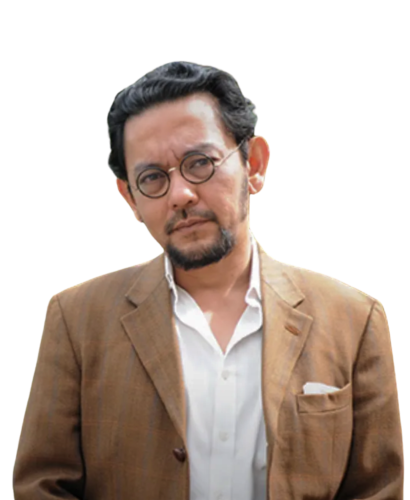
PROF. DR. AMIR HOSSEIN ZEKRGOO

Untitled design (55)

PROF. DR. AMIR HOSSEIN ZEKRGOO
Professor of Islamic and Oriental Arts
Professor Fellow

Prof. Amir Hossein Zekrgoo is a scholar-artist whose intellectual and creative life unfolds across the luminous intersections of art, spirituality, and civilisation. Trained as both a practitioner and historian of Islamic and Oriental arts, his work moves fluidly between studio and scholarship—where brush, script, and image become vessels of meaning.

With nearly three decades of teaching, he has shaped generations of students in painting, calligraphy, and photography, while advancing deeper inquiries into the symbolic and metaphysical dimensions of art. His scholarship extends across Persian mystical literature, comparative religion, and the aesthetics of sacred traditions, reflecting a rare synthesis of visual sensitivity and philosophical depth .

Educated in fine arts, Indian art, and manuscript studies across institutions in the United States, India, and beyond, his intellectual formation is profoundly trans-cultural. Fluent in multiple classical and modern languages, he navigates textual and artistic traditions with ease, drawing connections between worlds often studied in isolation.

Currently affiliated with the University of Melbourne, International Institute of Islamic Thought and Civilization, and University of Tehran, his work continues to explore the enduring dialogue between art and the sacred.

In his scholarship, art is not merely aesthetic—it is contemplative: a language through which the visible gestures toward the unseen, and form becomes a reflection of meaning itself.

  • Fine ArtsUniversity of Kansas, United States
  • Indian Art StudiesUniversity of Delhi, India
  • Islamic Manuscripts & Monumental InscriptionsNational Museum Institute of Art History, Conservation and Museology, India

    In addition to his formal education, he pursued extensive studies in:

    • Classical Persian, Arabic, and Islamic artistic traditions
    • Comparative religion and Oriental arts
    • Multiple languages including Persian, Arabic, Turkic, Urdu, Hindi, Sanskrit, and Malay
  •  
Article Publications
2025 Mastur: The veiled legacy of a forgotten 18th-century female Iranian poet. Al-Shajarah, 30(1), pp. 211–229.
2025 Discoveries from a miniature manuscript: a 16th-century volume of Hafez’s ghazals. Al-Shajarah, 30(2), pp. 532–542.
2024 The confused whale of the China Sea: water symbolism in Hamzah Fansuri’s works. Al-Shajarah, 29(1), pp. 79–98.
2024 Persian marriage contract of an Indian Sufi emperor: Southeast Asian fate of the last Mughal. Al-Shajarah, 29(2), pp. 409–435.
2024 Devotional poetry in manuscript terminology: Golzār-e Ṣafā. Al-Shajarah, 29(1), pp. 207–222.
2023 Trans-nationalism and civilisational identity: Rumi on land, language, and love. Al-Shajarah, 28(1), pp. 73–96.
2022 Introduction to Persian seals: devotional seals in an 18th-century manuscript. Al-Shajarah, 27(1), pp. 151–170.
2020 ‘Treasures of sciences in the lovely realm of sights’: study of āmulī’s manuscript. Al-Shajarah, 25(1), pp. 163–189.
2020 Illustrated manuscript findings from Nāmī’s Laylī wa Majnūn & Khosrow wa Shīrīn. Al-Shajarah, 25(2), pp. 335–359.
2018 Form and content: assessment of a 17th-century illustrated Shahnameh manuscript. Al-Shajarah, 23(1), pp. 41–65.
2017 Rise of eclecticism in 21st-century Malaysian mosque architecture. Planning Malaysia, 15(1), pp. 295–304.

PROF. DR. JASSER AUDA

Untitled design (54)

PROF. DR. JASSER AUDA
Professor of Islamic Law and Maqasid Studies
Professor Fellow

Prof. Jasser Auda is a leading contemporary scholar of Islamic thought whose intellectual project seeks to renew the very architecture of Islamic scholarship through a maqāṣid-based vision. As the founder of the Maqasid Institute and holder of the Al-Shatibi Chair for Maqasid Studies, his work advances a systemic methodology that reorients law, ethics, and public life toward the higher objectives of the Qur’an and the Prophetic tradition.

Formed through both classical and modern pathways—having memorised the Qur’an and studied in the circles of Al-Azhar Mosque, and later earning doctorates in the philosophy of Islamic law and systems analysis—his scholarship bridges revelation and complexity, tradition and systems thinking . This rare synthesis defines his intellectual contribution: the articulation of maqāṣid not as static principles, but as a dynamic, interconnected framework for reform.

His academic journey spans institutions across the globe, from Canada and the Middle East to Southeast Asia and beyond, reflecting a truly transnational engagement with Islamic thought. Through more than twenty-five books—many translated into numerous languages—he has shaped contemporary discourse on maqāṣid, governance, and the future of Islamic jurisprudence.

In his work, law is not merely interpreted; it is re-envisioned. Knowledge becomes a living system—one that, when guided by purpose, aspires toward justice, mercy, and the flourishing of human civilisation.

  • PhD in Philosophy of Islamic LawUniversity of Wales, United Kingdom
  • PhD in Systems AnalysisUniversity of Waterloo, Canada
  • Traditional Islamic StudiesAl-Azhar Mosque (study circles), Egypt
  • Qur’an Memorisation (Hifz) — Early foundational education in Islamic sciences
Article Publications
2025 Toward a Maqāṣid-Based Legal Reform: systemic thinking for social transformation. Indonesian Journal of Islamic Law, 8(2), pp. 209–228.
2025 Rethinking Islamic law for Europe: the concept of the Land of Islam. In: Imams in Western Europe, pp. 39–49.
2025 Maqasid for re-envisioning Islamic higher education and sustainability. Islamic Finance and Sustainable Development, pp. 8–27.
2025 Maqasid as a basis for an integrated framework and methodology. Journal of Contemporary Maqasid Studies, 4(1), pp. 1–20.
2022 Re-envisioning Islamic scholarship: Maqasid methodology as a new approach. Claritas Books.
2022 Opening remarks by Editor-in-Chief (Arabic). Journal of Contemporary Maqasid Studies, 1(1), pp. v–viii.
2022 Methodological aspirations: opening remarks by Editor-in-Chief. Journal of Contemporary Maqasid Studies, 1(1), pp. i–iv.
2022 Opening remarks by Editor-in-Chief (Malay). Journal of Contemporary Maqasid Studies, 1(1), pp. xxiii–xxviii.
2022 Maqasid methodology: guide for researchers in maqasid research network. Journal of Contemporary Maqasid Studies, 1(1), pp. 1–30.
2022 Maqasid methodology for re-envisioning Islamic higher education. Journal of Contemporary Maqasid Studies, 1(1), pp. 31–58.
2022 How do we realise Maqasid al-Shariah in practice. Retrieved June 30.
2021 The concept of civil state in Islamic juridical tradition. International Research Journal of Islamic Civilization, pp. 46–67.
2020 The Objectives of Islamic Law: promises and challenges of Maqasid al-Shari'a. Bloomsbury Publishing.
2020 Maqasid al-Shariah: a beginner’s guide (Ukrainian edition). IIIT.
2020 Moral status of organ donation and transplantation in Islamic law. Transplantation Direct, 6(3), e536.
2018 Issues in fatwas on orphan care and legal adoption. IIIT Fiqh Forum.
2018 The Objectives of Islamic Law: promises and challenges. (Edited volume).

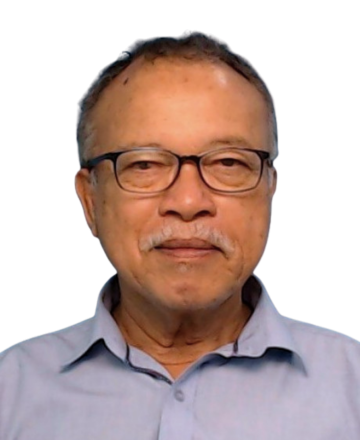
DR. WAN ALI @ WAN YUSOFF BIN WAN MAMAT

Untitled design (51)

DR. WAN ALI @ WAN YUSOFF BIN WAN MAMAT
Doctor of History and Manuscripts in the Malay World
Senior Academic Fellow

Dr. Wan Ali @ Wan Yusoff bin Wan Mamat is a scholar of memory and manuscripts, whose intellectual life has been devoted to the preservation of the written heritage of the Malay world. His journey began not in lecture halls, but in the living archive of the National Library of Malaysia, where he served for over three decades, culminating as Director General—a custodian not only of books, but of civilisation itself.

His transition into academia at the International Islamic University Malaysia did not mark a departure, but a deepening. At ISTAC-IIUM, his scholarship bridges librarianship, history, and Islamic civilisation, focusing on Malay manuscripts, Jawi script, and the ethics of preservation. In his work, the manuscript is not merely text—it is testimony: of intellect, of faith, of a civilisation inscribed across time .

His research and supervision reflect a sustained effort to safeguard and reinterpret this legacy, from cataloguing rare collections to advancing digital preservation. As an educator, he imparts not only technical knowledge, but a sense of responsibility toward heritage and its transmission.

In his scholarship, preservation becomes an act of continuity—ensuring that what was once written in ink may continue to speak, quietly yet enduringly, to future generations.

  • Doctor of Philosophy (Malay Literature) – Doctor of Philosophy, Universiti Kebangsaan Malaysia (UKM)
  • Library & Information Studies – Masters Degree, University of London
  • Bachelor of Arts (Malay Studies) – Bachelor Degree, Universiti Malaya (UM)
  • Diploma in Librarianship – Diploma, University of Wales
Article Publications
2023 Colonialism in the Malay Archipelago: civilisational encounters. Journal of the Humanities and Social Sciences of Southeast Asia, 179(2), pp. 275–278.
2022 From decolonization to ethno-nationalism: a study of Malaysia’s school history syllabuses and textbooks (1905–2020). Al-Shajarah, 27(2), pp. 417–421.
2021 Exploring library management support for enhancing self-directed learning: narratives from research-support librarians. Library Management, 42(8–9), pp. 584–610.
2021 Malaysian research-support librarians’ self-directed learning traits and competencies. Journal of Librarianship and Information Science, 53(4), pp. 630–644.
2017 Psychometric properties of instruments measuring competencies of research support librarians. Man in India, 97(19), pp. 183–194.
2014 Sejarah perkembangan perpustakaan Tan Sri Omar Mohd Hashim. Warkah PSM, 42(14), pp. 5–7.
2013 Accessing Malay manuscripts worldwide through ICT: the union catalogue project. Southeast Asia Library Group Newsletter, (45).
2013 Kutai Inscriptions. Warkah PSM, 37(13), pp. 11–15.
2013 Librarian working with Islamic collections: Malaysian experience. Journal of Information and Knowledge Management, 3(2), pp. 127–133.