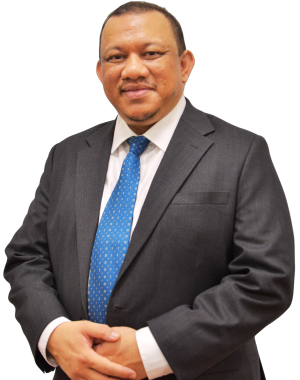

ASSOC. PROF. DR. KHAIRIL HUSAINI BIN JAMIL

ASSOC. PROF. DR. KHAIRILHUSAINI BIN JAMIL

ASSOC. PROF. DR. KHAIRIL HUSAINI BIN JAMIL
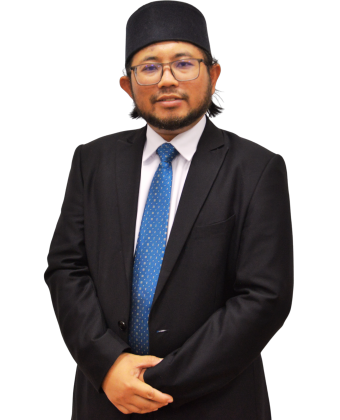
Deputy Dean of Postgraduate, Research & Innovation

Assoc. Prof. Dr. Khairil Husaini bin Jamil is a scholar whose intellectual journey unfolds within the luminous traditions of Qur’anic and hadith sciences, where text, meaning, and being converge. As an associate professor at the International Islamic University Malaysia, his work reflects a sustained engagement with Islamic epistemology, theosophy, and the deeper architecture of revealed knowledge.

Formed in the scholarly circles of the Islamic University of Madinah and later refined at SOAS, University of London, his training bridges classical mastery and critical inquiry. His early immersion in manuscript studies—working with the handwritten legacy of Ibn Hajar al-Asqalani—cultivated in him a sensitivity to the textures of tradition, while his later research on al-Khatib al-Baghdadi deepened his exploration of Sunni epistemology .

His scholarship is marked by both preservation and renewal: editing classical texts, advancing methodologies in hadith studies, and proposing integrative frameworks such as the triadic approach of riwāyah, dirāyah, and riʿāyah. Across languages and disciplines, he writes and lectures with an awareness that knowledge is not merely accumulated, but cultivated.

In his work, one finds a quiet but persistent aspiration—to recover the harmony between intellect and revelation, and to rearticulate that harmony for a world in search of meaning.

  • Doctor of Philosophy in Near and Middle Eastern Studies – Doctor of Philosophy, University of London
  • Master in Sciences of Prophetic Traditions – Masters Degree, Islamic University of Medina
  • Bachelor of Hadith Sciences and Islamic Studies – Bachelor Degree, Islamic University of Medina
  • Diploma in Philosophy and Research Methodology – Diploma, Namaa Academy for Islamic Studies and Humanities

Article Publications
2026 On living hadîts: a new trend of hermeneutics approach to study hadîts in Indonesia. Miqot, 50(1), pp. 128–145.
2025 The shepherding notion of al-imārah: abstracting the worldview of the Semitic root ʼmr. Al-Shajarah, 30(1), pp. 55–89.
2025 Questioning and questions in Islam and their importance. Al-Zahra, 22(1), pp. 39–62.
2024 Between Traditionalising and Futuring: applying the broader maqasid paradigm to hadith studies. APJEE, 39(2), pp. 183–196.
2024 Exploring the impact of scientific advancements on hadith commentaries. IJIT, 26, pp. 136–145.
2024 Maqashid sunnah as a foundation for progressive Islamic education in the digital era. PROGRESIVA, 13(1), pp. 35–56.
2024 Journey to Islamicisation of human knowledge (book review). Asiatic, 18(1), pp. 135–139.
2024 The interplay between religion and science: the experience of Islamic discourse. IJR, 5(1), pp. 253–263.
2024 The problem of “Transmit from the Children of Israel…” and its solutions. Al-Hikmah, 7(2), pp. 456–505.
2024 Features of Fiqh al-ʿIlm in Hadith literature. Dirasat Islamiyyah, 19(1), pp. 67–84.
2023 Exploring the concept of “kalimāt” in the Quran and hadith. JSSH, 6(6), pp. 10–16.
2023 Sufi-Salafi scholarship in Maghribi: ʿAbd Allāh al-Talīdī. Islamiyyat, 45(1), pp. 111–124.
2023 The “Right to Life” in UDHR and Islamic sources. UMRAN, 10(3), pp. 41–55.
2022 Corruption and hypocrisy in Malay Muslim politics. Asiatic, 16(1), pp. 165–168.
2022 Editorial remark. al-Burhān Journal, 6(1–2).
2022 Muslim entrepreneurs: between the roots and the fruits. eTIJARI, 2(10).
2022 Muslims in the post-pandemic world. JSSH, 5(5), pp. 10–15.
2022 Report on International Conference on Islamic Spiritual Care. Intellectual Discourse, 30(2), pp. 431–433.
2022 European sources of gunnery knowledge in Islamic texts. Al-Shajarah, 27(2), pp. 263–288.
2022 Who moved my sanad? Journal of Qur'an and Hadith Studies, 11(1), pp. 1–18.
2021 Editorial remarks. al-Burhān Journal, 5 (multiple issues).
2021 The emergence of the Sunni school of Kufa. Al-Hikmah, 4(3), pp. 99–115.
2020 Early Sunnī historiography: Khalīfa b. Khayyāṭ. Ilahiyat Studies, 11(2), pp. 326–329.
2020 Book review: Metodologi penyelidikan dalam pendidikan. Intellectual Discourse, 28(1), pp. 353–356.
2020 Rabi Al-Awwal: the month of momentous events. Islamicity.org.
2020 Reasserting the maqāṣid of Islamic knowledge curricula. al-Burhān Journal, 4(2), pp. 1–26.
2019 Islamic scriptures and voice intonation. KEMANUSIAAN, 26(Supp.1), pp. 1–21.
2019 Isnad and tajrid methodology in hadith literature. al-Burhān Journal, 3(1), pp. 76–105.
2019 Muḥaddithīn practices in education. Journal of Islamic Educational Research, 4(1), pp. 31–41.
2018 Ḥadīth, piety and law (book review). Intellectual Discourse, 26(1), pp. 263–267.

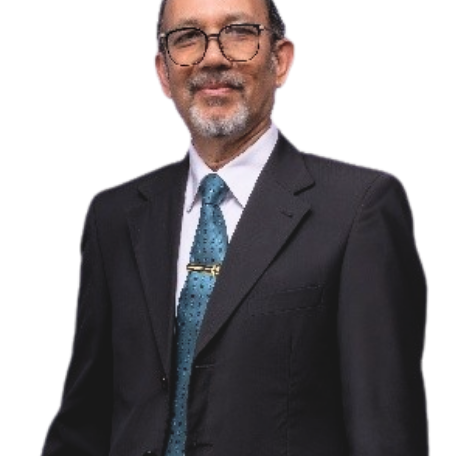
ASSOC. PROF. DR. MOHD. NOH BIN ABDUL JALIL

ASSOC. PROF. DR. MOHD. NOHBIN ABDUL JALIL

ASSOC. PROF. DR. MOHD. NOH BIN ABDUL JALIL
Deputy Dean of Student Development and Community Engagement

Assoc. Prof. Dr. Mohd. Noh Bin Abdul Jalil is a scholar of quiet depth whose intellectual journey unfolds at the confluence of religion, civilisation, and the Malay world. His work reflects a sustained engagement with the historical and philosophical currents that have shaped Islamic thought across time, particularly in Southeast Asia.

Specialising in comparative religion, da‘wah, and the Islamisation of knowledge, he navigates classical Malay texts and early scholarly traditions with both precision and reverence. His scholarship revisits the encounters between Islam and other faiths, illuminating how meaning, belief, and identity were negotiated in the Malay Archipelago between the 14th and 17th centuries .

In the classroom, he teaches courses such as Islamic Da‘wah and World Religions, where students are invited into a reflective dialogue between past and present. His teaching is not merely instructional, but formative—cultivating intellectual humility and a deeper awareness of religious plurality.

As a researcher and supervisor, he continues to guide inquiries into theology, interfaith understanding, and the enduring relevance of classical scholarship in contemporary life. His work, at once historical and forward-looking, speaks to a larger aspiration: that knowledge, when rooted in wisdom, becomes a bridge—between traditions, between communities, and ultimately, between hearts.

  • Doctor of Philosophy in Islamic Revealed Knowledge & Heritage (Usul Al-Din & Comparative Religion) – Doctor of Philosophy, International Islamic University Malaysia
  • Usul Ad-Din and Comparative Religion – Masters Degree, International Islamic University Malaysia
  • Fiqh and Usul Al-Fiqh – Bachelor Degree, International Islamic University Malaysia
Article Publications
2024 HAMKA’s interpretation on interfaith marriage: its relevance in Malaysia. Journal of Islam in Asia, 21(3), pp. 207–228.
2024 Synthetic human embryos, embryo models and embryo-like structures in Islam. Theology and Science, 22(4), pp. 790–815.
2023 Hamka's discourse on Christianity in Tafsīr al-Azhar. Al-Itqan, 8(2), pp. 93–120.
2023 Ketepi perbezaan pertahan jati diri bangsa. Berita Harian, pp. 11.
2022 Digital entrepreneurship and da’wah opportunities. e-TIJARI, 2(05).
2022 Promoting diversity via local wisdom. IIUM Today.
2022 The role of mass media as a channel to learn about Islam among Muslims in Gombak. Intellectual Discourse, 30(1), pp. 187–212.
2022 The Role of Mass Media As A Channel To Learn About Islam Among Muslims In Gombak. Intellectual Discourse, 30(1), pp. 187–212.
2022 Youth and mosque: exploring the views of youth on mosque activities in Gombak, Selangor. Al-Itqan, 6(1), pp. 131–149.
2021 Exploring the views of mosque committee members on mosque religious education programs in Gombak. Millah, 21(1), pp. 183–216.
2021 Integrated education in Kerala: the pioneering role of Sayyed Ismail Shihabuddin Pookkoya Thangal. MANU, 32(2), pp. 61–72.
2021 Internationalisation of the Islamic thought: the contributions of Sayyed Ismail. Jurnal ‘Ulwan, 6(3), pp. 1–13.
2021 The discourse of Islam and other religions by early ʿulamā’ in the Malay world. AFKAR, 23(2), pp. 311–338.
2021 The notion of afterlife in Islam and Sikhism and its implications. Al-Itqan, 5(2), pp. 117–135.
2021 The role of mosque committee in empowering mosque educational programmes. Journal of Islam in Asia, 18(3), pp. 165–187.
2020 Comparative study between Risale-i Nur and Tafsīr al-Azhar’s methodology in Quranic exegesis. Journal of Islam in Asia.
2020 Examining the role of ‘ulamā in the Islamization process of the Malay world. Intellectual Discourse, 28(1), pp. 61–76.
2020 Halal Quality Management System: A comparison between Halal and Kosher. Al-Itqan, 4(1), pp. 88–115.
2020 Nur al-Din al-Raniri’s commentaries on other religions in the Malay world. Journal of Al-Tamaddun, 15(1), pp. 147–155.
2019 Discourse on eschatology of religions other than Islam in 17th century Malay texts. Journal of Islam in Asia, 16(Special Issue), pp. 221–236.
2019 Politico-cultural-religious milieu of Southeast Asia. KEMANUSIAAN, 26(Supp.1), pp. 109–129.
2018 Nationhood and loyalty in Islam. Al-Itqan, 1(Special Issue), pp. 7–18.
2017 Abū Al-Ḥasan Al-Masʻūdī on pre-Islamic Arab religions and belief. Intellectual Discourse, 25(2), pp. 357–380.
2017 An overview on early ulamas’ representations of other religions. Jurnal Al-Abqari, 11, pp. 7–19.
2017 Religious scholars and political leaders in classical Malay texts. Umran, 4(3), pp. 35–42.
2017 الإبداع عند أبي الحسن المسعودي في دراسة تاريخ الأديان. Journal of Islam in Asia, 14(3), pp. 161–187.
2015 The roles of the Malay in the process of Islamization of the Malay World. International Journal of Nusantara Islam, 2(2), pp. 11–20.

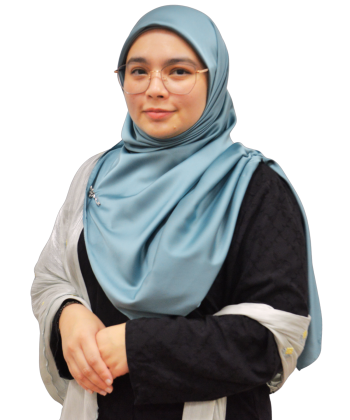
DR. SH FATIMAH ALZAHRAH BINTI SYED HUSSEIN

DR. SH FATIMAH ALZAHRAH BINTI SYED HUSSEIN

DR. SH FATIMAH ALZAHRAH BINTI SYED HUSSEIN
Deputy Dean of Academic and Internationalisation

Dr. SH Fatimah Alzahrah binti Syed Hussein is a distinguished sociologist and academic leader, serving as Deputy Dean of Academic and Internationalisation. Her scholarship moves at the intersection of sociology, gender, and community life, guided by a quiet conviction that knowledge must ultimately return to society in the form of care, dignity, and transformation.

In the classroom, she traverses disciplines with intellectual grace, teaching courses such as Sociology of Marriage and Family, Advanced Sociological and Anthropological Theories, and Economy and Society. Here, ideas are not merely transmitted but awakened—students are invited to see the social world with both critical clarity and ethical depth . As a supervisor, she has accompanied many postgraduate journeys, shaping inquiries into women’s empowerment, religion, and lived experiences of inequality.

Her research attends to the subtle yet urgent textures of society—menstrual health, social cohesion, and the resilience of marginalized communities. Whether examining post-pandemic realities or the labour trajectories of Muslim women, her work carries both analytical precision and human concern .

A prolific writer, she bridges scholarship and advocacy, her voice resonating across academic and public spheres. Recognised with awards including a Gold Award for Women Empowerment, she remains deeply engaged in scholarly communities, both local and global.

  • Doctor of Philosophy in Sociology – Doctor of Philosophy, Victoria University of Wellington
  • Bachelor of Human Sciences in Sociology and Anthropology – Bachelor Degree, International Islamic University Malaysia
Article Publications
2025 Faith in action: educating for peace, justice, and human dignity. Islamicity.
2025 Ummatic mind as a weltanschauung in postmodern society. IIUM Today.
2024 ‘Women in Action’ towards social entrepreneurial innovation and sustainable ventures for social good. IIUM Today.
2024 Book review: Best Laid Plans: Women Coming of Age in Uncertain Times by Jessica Halliday Hardie. Contemporary Sociology, 53(3), pp. 252–253.
2024 Encouraging women's empowerment: a qualitative analysis on household food waste management in Bangladesh utilizing 5R approach. Saudi Journal of Humanities and Social Sciences, 9(8), pp. 238–251.
2024 Freedom of expression in unpredictable times: stakeholders' perceptions of Malaysia's track record in the 3rd UPR cycle. Journal of Diplomacy and Foreign Relations, 21(1).
2024 Investigating the menstrual health practices and needs of Rohingya women refugees living in Malaysia. Current Trends in Biotechnology and Pharmacy, 18(3S), pp. 161–176.
2024 Making care a priority to strengthen and support family institutions in Malaysia. IIMU Bulletin, 5, pp. 16–17.
2024 SOCA 2320 and ENGL 1330 students support PPR Sg. Bonus families. IIUM Today.
2024 SOCA academics at Posyandu of Desa Cileles, Jatinagor, West Java for fieldwork. IIUM Today.
2023 ‘We’re not hysterical’ – A call for action on the gender pain gap in Malaysia. The Star, pp. 1–8.
2023 Kemelut kemiskinan haid yang berpanjangan. Dewan Kosmik, 31(03), pp. 5–9.
2023 Realising accepted UPR recommendations: challenges and realities in Malaysia’s commitment to enforce freedom of expression. SINERGI, 3(1), pp. 66–81.
2021 Apa itu kemiskinan haid dan 4 cara anda boleh membantu!. SuciCup.
2021 Focus on working together. The Star.
2021 Kemiskinan haid: krisis kesihatan awam yang perlu diakhiri. IJCWED, 14, pp. 109–112.
2021 Memperkasakan keusahawan sosial produk menstruasi bagi membasmi kemiskinan haid. IJCWED, 14, pp. 41–47.
2020 Expressing breastmilk while on break and in private: a qualitative study of Malaysian first-time mothers. Community, Work & Family.
2020 Gender equality benefits all. The Star.
2020 Lifting taboo on menstruation. The Star Online.
2020 Preservation of the intellect: developing research skills among IIUM undergraduates. Journal of Society and Media, 4(2), pp. 262–278.
2019 The fading birth practice: urban Malay mothers negotiating confinement practice. IIUM Journal of Human Sciences, 2(1), pp. 10–18.
2018 Poverty, women’s empowerment and social entrepreneurship among B40 urban women in Malaysia. Opcion, 34(16), pp. 559–564.

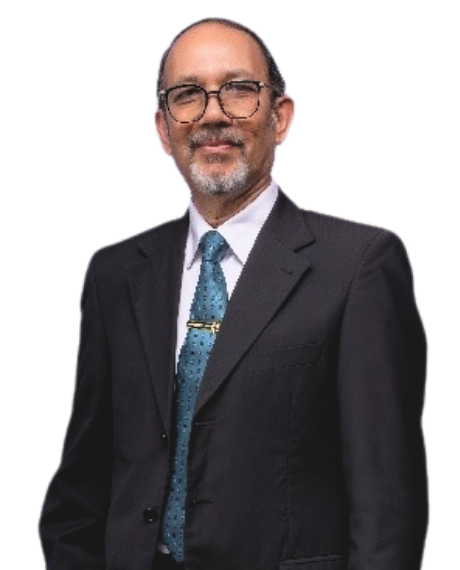
PROF.  DR. HAZIZAN BIN MD. NOON 

PROF. DR. HAZIZAN BIN MD. NOON
Dean

Prof. Dr. Hazizan B. Md. Noon serves as the Dean of ISTAC-IIUM, embodying a rare synthesis of intellectual rigor and civilisational vision. A scholar of sociology deeply rooted in the study of development, religion, and the Islamisation of knowledge, his work reflects a lifelong engagement with the question of how societies evolve in harmony with moral and metaphysical truths.

Across decades of teaching, he has guided students through courses such as Islamic Perspective of Sociology and Anthropology and Contemporary Muslim Society, where the boundaries between revelation and reason, tradition and modernity, are thoughtfully traversed . His classroom is not merely a space of instruction, but one of intellectual awakening.

As a supervisor, Prof. Hazizan has mentored generations of scholars, nurturing inquiries into identity, civilisation, and the enduring relevance of Islamic thought. His writings—spanning books, journal articles, and reflective essays—interrogate the moral fabric of modern societies while offering pathways toward renewal.

Honoured with accolades such as the TAKRIM Award, his career stands as a testament to scholarship that is not only analytical, but also contemplative—where knowledge is pursued not as an end, but as a trust.

  • Development & Social Change – Doctor of Philosophy, University of Edinburgh
  • Study of Religion – Masters Degree, University of London
  • Bachelor of Islamic Studies & Anthrophology Sociology – Bachelor Degree, Universiti Malaya (UM)
Article Publications
2024 A scholar and man of honour, humility, and devotion: a tribute to Professor Dr. Jamil Farooqui. IIUM Today.
2023 The Gombak Integrated School of Thought in Social Sciences (GISTS). IIUM Today.
2019 ‘Asabiyyah & ‘Umran in Ibn Khaldun’s thought. Journal of Islamic Law Review, 15(2), pp. 129–149.
2019 Editorial. IIUM Journal of Religion and Civilisational Studies (IJRCS), 2(1), pp. 1–7.
2019 Editorial: IIUM Journal of Religion and Civilisational Studies (Vol.2, Issue 2), 2(2), pp. 83–87.
2018 Development and modernization of OIC member countries: A study based on selected indicators. Intellectual Discourse, 26(1), pp. 229–253.
2018 Editorial. IIUM Journal of Religion and Civilisational Studies (IJRCS), 1(1), pp. 1–5.
2017 Factors influencing the deterioration of traditional madrasahs’ performance in Zanzibar: The teachers’ experiences. The International Journal of Humanities & Social Studies, 5(9), pp. 328–335.
2017 Teachers’ perceptions on the concept of Murabbi in Islamic integrated schools in Zanzibar. IJRRSSH, 4(4), pp. 20–27.
2016 Determinant of happiness among urban civil servants of UiTM Shah Alam. Journal of Administrative Science, 13(2), pp. 1–16.
2016 Economic well-being of selected administrative staff of an urban public university. Environment-Behaviour Proceedings Journal, 1(1), pp. 362–367.
2016 Problems and sufferings of flood-affected people in Malaysia. South Asian Anthropologist, 16(2), pp. 129–135.
2016 Torrential floods in Malaysia: Assessing loss and vulnerabilities. Mediterranean Journal of Social Sciences, 7(5), pp. 192–201.
2014 Tourism in Malaysia: Problems and prospects. South Asian Anthropologist, 14(2), pp. 119–128.
2013 IIUM at 30: Reflections on Islamisation programmes. Kulliyyah Research Bulletin, 4(2), pp. 2–6.
2012 Subjective life satisfaction among urban Malay civil servants. IJSSHS, 4(1), pp. 295–303.
2003 Psychological profiles of effeminate, male and female students. Psychologia, 46(4), pp. 235–245.
2003 Religiosity and social problems in Malaysia. Intellectual Discourse, 11(1), pp. 77–87.
2002 Formation of desired values: The role of parents. International Journal of Social Economics, 29(6), pp. 468–479.
2002 Values and their relationship to social problems in Malaysia. AJISS, 19(3), pp. 57–78.